Arguments & conflict: how to fight fair
Most arguments aren't lost on the facts. They're lost when one person gets defensive, the other gets sarcastic, and the original problem disappears under the fight about the fight. These guides cover the habits that derail an argument, the skills that get two people back to the actual issue, and straight answers to what's normal.
They draw on relationship research, especially the Gottman Institute's, with sources on every page. For a verdict on your own disagreement, try the free argument judge.
What derails an argument
Behaviors that turn a disagreement into a fight, and what to do instead.
- Blame ShiftingAlso called shifting the blame, blame shifting in relationshipsBlame shifting is moving responsibility for your own action onto someone else, so the conversation becomes about their fault instead of yours: "I only yelled because you provoked me." Everyone does it occasionally when they feel attacked. As a habit, blame shifting keeps problems unsolved and can slide into manipulation.Read it →
- Contempt in RelationshipsAlso called contempt, contemptuous behaviorContempt in relationships is treating your partner as beneath you: mockery, sneering, name-calling, eye-rolling, sarcasm meant to wound. The Gottman Institute calls it the single greatest predictor of divorce among the Four Horsemen. It grows from long-held resentment, and the antidote is to state your needs directly and rebuild appreciation.Read it →
- DARVOAlso called deny attack reverse victim and offender, darvo meaningDARVO stands for Deny, Attack, and Reverse Victim and Offender. Psychologist Jennifer Freyd named it for a reaction people may show when confronted about wrongdoing: they deny it, attack the person raising it, and recast themselves as the real victim. Research finds it is common, shifts blame onto the confronter, and loses power once people recognize it.Read it →
- Defensiveness in RelationshipsAlso called being defensive, defensivenessDefensiveness in relationships means protecting yourself from a complaint with excuses, counter-complaints or wounded innocence instead of hearing it. It is one of John Gottman's Four Horsemen, and nearly everyone does it. The antidote is to accept responsibility for at least part of the problem, which lets the conversation move forward.Read it →
- Deflection in ArgumentsAlso called deflecting, deflecting in argumentsDeflection is redirecting attention away from something uncomfortable, usually your own behavior, so it never gets discussed. In an argument it looks like changing the subject, bringing up an old fight, joking it off or turning the question back on the other person. Deflection protects the person for a moment and leaves the problem untouched.Read it →
- Emotional FloodingAlso called flooding in relationships, diffuse physiological arousalEmotional flooding is physical and emotional overwhelm during conflict: your heart races, stress hormones surge, and you lose the ability to listen or think flexibly. People who are flooded tend to attack or shut down. The fix is to notice the signs early, call a break of at least 20 minutes, and actually calm your body before talking again.Read it →
- Gaslighting ExamplesAlso called gaslighting, what is gaslightingGaslighting is a pattern of manipulation that makes someone doubt their own memory, perception or sanity. Gaslighting examples include "That never happened", "You're too sensitive" and "You're imagining things", used again and again to override what you know you saw. One disagreement about the facts is not gaslighting; a repeated pattern that leaves you doubting yourself is.Read it →
- Passive Aggressive Behavior ExamplesAlso called passive aggression, passive aggressive communicationPassive aggressive behavior is showing anger indirectly instead of saying it: a cold "I'm fine", a joke with a sting, a favor done badly on purpose, a loud sigh instead of a request. Common passive aggressive behavior examples include backhanded compliments, convenient forgetting and pointed silence. The fix is saying the feeling directly.Read it →
- Stonewalling in RelationshipsAlso called shutting down in an argument, emotional withdrawalStonewalling is when one person in an argument shuts down and stops responding: no eye contact, no answers, eyes on a phone, or walking off without a word. It is one of John Gottman's Four Horsemen. It usually happens when someone feels overwhelmed, and what helps is an agreed break, not more pressure.Read it →
- The Gottman Four HorsemenAlso called the four horsemen of relationships, four horsemen of the apocalypse in relationshipsThe Gottman Four Horsemen are four ways of fighting that John Gottman's research links to relationships falling apart: criticism, contempt, defensiveness and stonewalling. Each has an antidote: a gentle start-up, a culture of appreciation, taking responsibility, and a real break to calm down. How you fight matters more than whether you fight.Read it →
- The Silent TreatmentAlso called being ignored after a fight, cold shoulderThe silent treatment is deliberately refusing to talk to someone, or acting as if they are not there, after a conflict. Sometimes it is a clumsy way of coping with overwhelming feelings; sometimes it is used to punish or control. Intent and pattern make the difference, and they decide how you should respond.Read it →
How to argue better
Skills that get two people from a fight to a decision.
- Active ListeningActive listening is listening to understand rather than to reply: you let the other person finish, summarize what you heard in your own words, ask questions to check, and acknowledge their feelings before giving your side. In an argument it lowers the temperature fast, because people stop repeating themselves once they feel understood.Read it →
- Conflict Resolution StrategiesAlso called conflict resolution steps, conflict resolution skillsConflict resolution strategies are structured ways to settle a disagreement so both sides can live with the result. The most reliable ones separate the people from the problem, focus on each side's underlying interests rather than fixed demands, generate several options before choosing, and use fair, objective criteria to decide.Read it →
- Fair Fighting RulesFair fighting rules are agreements two people make about how they will argue: one topic at a time, complaints about behavior instead of attacks on character, no contempt or name-calling, real listening before rebutting, and a time-out when either person is too upset to think. The goal is to solve the problem without wounding each other.Read it →
- How to Apologize SincerelyTo apologize well, name exactly what you did, take responsibility without excuses, acknowledge how it affected the other person, say what you will do differently, and offer to make it right. Research on apologies finds that taking responsibility and offering repair matter most, while asking to be forgiven matters least.Read it →
- How to Stop ArguingTo stop arguing, pause when either of you is too upset to think, take a break of at least 20 minutes with a set time to come back, then restart gently on one issue. Understand the other person's side before persuading. If it's the same fight on repeat, talk about why it matters to each of you.Read it →
- How to Win an Argument HonestlyTo win an argument honestly, make sure you're actually right, state your claim precisely, agree on what evidence would settle it, represent the other side at its strongest, concede what's true in their view, and avoid fallacies. In personal arguments, winning means the problem gets solved and the other person still feels respected.Read it →
- I StatementsAlso called I-messages, I statement examplesI statements are sentences that describe your own feelings and needs instead of judging the other person, for example 'I feel overwhelmed when the dishes pile up, and I need a hand tonight' instead of 'You never help.' They raise a problem without putting the listener on trial, so it can be solved.Read it →
Common questions
What is normal, what couples and families actually fight about.
- Arguments With ParentsAlso called fighting with parents, how to argue with parentsArguments with parents are normal at every age. For teens they usually involve freedom and rules; for adult children, life choices, advice and boundaries. They go better when you pick a calm time, say clearly what you want (to be heard, advice, or permission), describe your feelings without blaming, and listen long enough to understand their worry.Read it →
- How Often Do Couples Fight?There is no healthy number. In one diary study, married parents recorded close to one conflict a day on average, and happy, stable couples range from those who rarely argue to those who debate loudly. How often couples fight matters far less than how they fight: with respect and repair, or with contempt and stonewalling.Read it →
- What Do Couples Fight About?What do couples fight about? Most often chores, money, children, in-laws and extended family, time together, attention and phones, sex and affection, and plans. Research suggests the topic matters less than what sits underneath it: money fights, for example, are not the most frequent but tend to be the most recurring and least resolved.Read it →
Frequently asked questions
Is it normal for couples to argue?
Yes. Disagreement is part of any close relationship. Researchers who study couples, most famously John Gottman, find that how partners argue matters far more than whether they do. See how often couples fight.
What are the signs an argument has become unhealthy?
Contempt, constant criticism of the person rather than the problem, shutting down for days, and any threat, intimidation or physical force. The first four are the patterns Gottman calls the Four Horsemen. Threats and force are not a communication problem: they are a safety problem.
How do you stop an argument from escalating?
Slow it down. Name the actual issue, talk about one thing at a time, use I statements instead of accusations, and take a real break of at least 20 minutes if either of you is too worked up to think. Fair fighting rules put this into a short list you can agree on in advance.
When should we see a counselor?
When the same fight keeps coming back without progress, when contempt or stonewalling has become routine, or when either of you dreads talking at all. A counselor isn't a last resort: couples who go earlier tend to have more to work with.
The ArgueResolver app · iPhone and Android
Record the argument. Get the verdict.
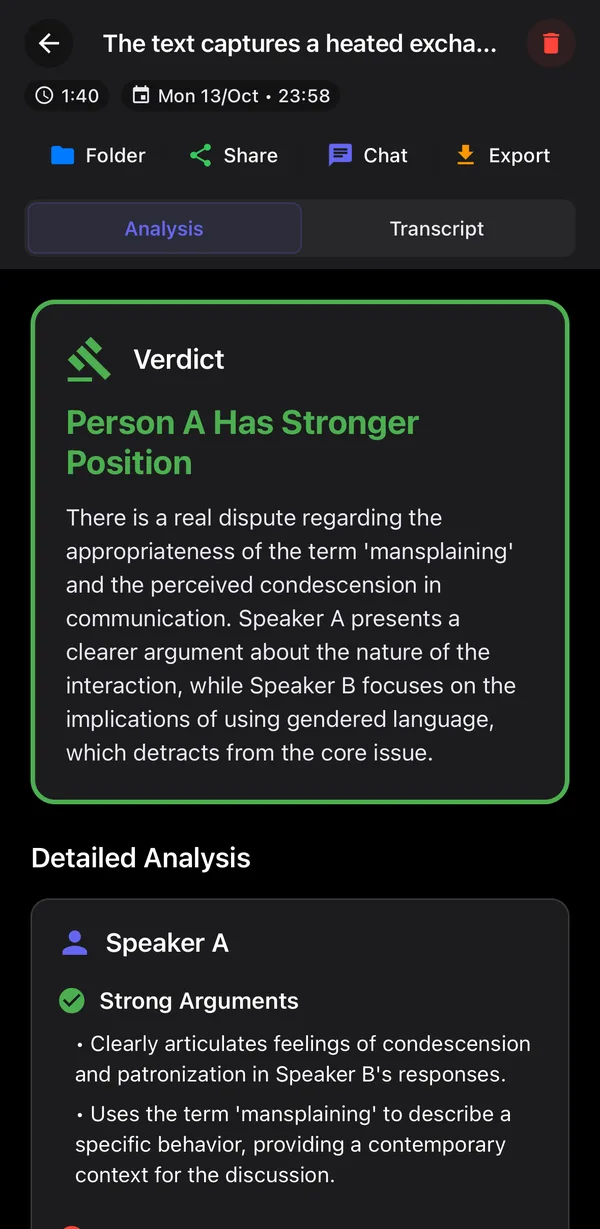
ArgueResolver listens while you talk it out, works out who said what, and gives an honest verdict on what was actually said, with compromises and steps to fix it.
Free to start · See how it works