How to Apologize Sincerely: Steps, Scripts and What Not to Say
Updated · 6 min read · 3 sources
The short answer
To apologize well, name exactly what you did, take responsibility without excuses, acknowledge how it affected the other person, say what you will do differently, and offer to make it right. Research on apologies finds that taking responsibility and offering repair matter most, while asking to be forgiven matters least.
How to apologize: the five steps
If you want to know how to apologize in a way that actually lands, the short version is: be specific, own it, and fix what you can. Each step below closes a gap that a weak apology leaves open.
- 1. Name the specific thing
- 'I'm sorry I made that joke about your job in front of your friends' beats 'I'm sorry for last night.' Vague apologies sound like you are apologizing for their reaction rather than your action.
- 2. Take responsibility
- Use 'I', not the passive voice. 'I made a mistake' is an apology; 'mistakes were made' is a press release.
- 3. Acknowledge the impact
- Show you understand what it cost them: 'You were embarrassed, and it made it look like I don't respect what you do.' Impact matters more than what you intended.
- 4. Explain only if it helps, never to excuse
- If context truly matters, give it briefly and keep owning the outcome. When in doubt, leave the explanation out.
- 5. Make it right
- Say what you will do differently, offer to repair what you can, and then do it. If you are not sure what would help, ask: 'Is there anything I can do to make this right?'
What research says makes an apology work
A 2016 study by Roy Lewicki and colleagues asked American adults to rate apologies for a breach of trust. Apologies were rated as more effective the more of six elements they contained: acknowledging responsibility, explaining what went wrong, expressing regret, offering repair, declaring that it won't happen again, and asking for forgiveness. Acknowledging responsibility and offering repair were the two most important. Asking for forgiveness was the least important.
That matches what the Greater Good Science Center at UC Berkeley teaches: an apology works when it restores the other person's sense that they were wronged and did not deserve it, and when it gives them reason to trust that it won't happen again. A request for forgiveness puts the spotlight back on you. Repair puts it on them.
What it sounds like
Non-apologies that make things worse
Some sentences have the word 'sorry' in them and still deepen the hurt. They usually shift the focus to the other person's reaction, shrink what happened, or slip in a counter-charge.
- 'I'm sorry you feel that way.' (Apologizes for their feelings, not your action.)
- 'I'm sorry if anything I said upset you.' (The 'if' suggests maybe nothing happened.)
- 'I'm sorry, but you were really getting on my nerves.' (Everything after 'but' is a blame shift.)
- 'I already said sorry, what more do you want?' (Treats the apology as a payment that closes the account.)
- 'That's just not like me.' (Distances you from what you clearly did.)
How to apologize to your girlfriend, boyfriend or partner
With a partner, the apology usually has two layers: the thing itself and what it seemed to say about how you see them. Missing an important dinner is one thing; missing it without calling can feel like 'I'm not a priority.' Address both: 'I'm sorry I missed dinner, and I'm sorry I didn't call. You must have felt like you weren't on my mind at all, and that's not true.'
Pick a calm moment, keep eye contact, and resist the urge to defend yourself in the same breath. If the hurt is part of a larger pattern, say you see the pattern too, and propose something concrete. In the Gottman Institute's language, an apology is one of many possible repair attempts: anything that stops negativity from escalating. The best partners repair early and often, not just after big blowups.
How to apologize after a fight when you were both wrong
Apologize for your part only, and do not make it conditional on theirs. 'I'm sorry I raised my voice and brought up your ex. That was unfair' is complete on its own. 'I'll apologize if you do' turns an apology into a negotiation and usually restarts the fight.
Owning your share often makes it easier for the other person to own theirs, but give them time. If you are still too angry to mean it, wait. An apology delivered through clenched teeth is heard as contempt, not remorse.
What if they don't accept it?
An apology is something you give, not a trade. The other person may need time, or more than words, especially after a breach of trust. Say you understand, keep your commitment, and let your behavior make the case. Pushing for forgiveness right away ('so are we good?') tends to undo the apology.
If you keep apologizing for the same thing, the problem is not your apologies. It is a recurring issue that needs its own conversation. See how to stop arguing about the same thing. And if you are unsure whether you even owe an apology, laying out both sides in our free argument judge can give you an outside view before you decide.
What to say
I owe you an apology for what I said last night, and I'd like to do it properly.
There's no excuse for it. I was stressed, but that's mine to handle, not yours.
What would help you feel better about this?
I understand if you're not ready to move on. I meant it, and I'll show you.
I keep apologizing for this, which means I need to actually change it. Can we talk about how?
In an argument right now?
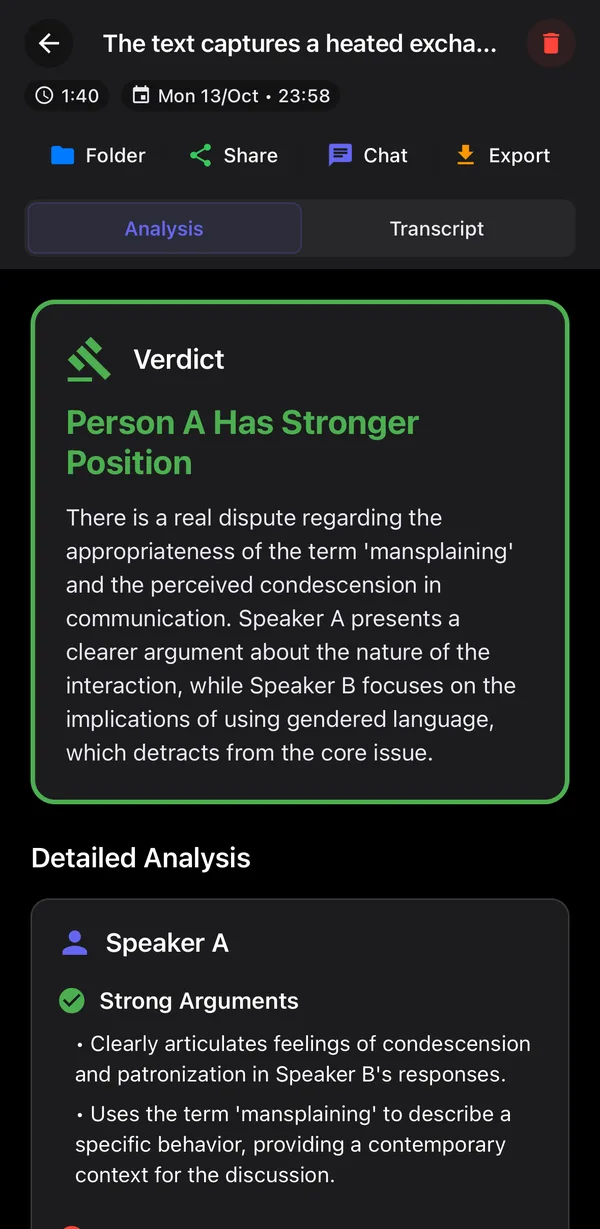
Type both sides and get a fair verdict, with the fallacies on each side. Free.
Questions people ask
What are the steps of a good apology?
Name what you did specifically, take responsibility without excuses, acknowledge the impact on the other person, say what you'll do differently, and offer to repair what you can. Then follow through.
How do you apologize without making excuses?
Keep any explanation short, put it after the apology, and keep owning the result: 'There's no excuse for it.' If the explanation shifts any blame onto the other person or circumstances, leave it out.
Should you apologize even if you don't think you were wrong?
You can apologize for the impact without conceding the whole argument: 'I still think we should have left early, but I'm sorry I snapped at you about it.' Only apologize for what you actually regret, or it won't sound sincere.
Is it okay to ask for forgiveness?
It's fine, but it's the least important part. In the Lewicki study, asking for forgiveness added the least to how effective an apology was rated. Focus on responsibility and repair instead.
Sources
Keep reading
- GuidesBlame ShiftingBlame shifting is moving responsibility for your own action onto someone else, so the conversation becomes about their fault instead of yours: "I only yelled because you provoked me." Everyone does it occasionally when they feel attacked. As a habit, blame shifting keeps problems unsolved and can slide into manipulation.
- GuidesDefensiveness in RelationshipsDefensiveness in relationships means protecting yourself from a complaint with excuses, counter-complaints or wounded innocence instead of hearing it. It is one of John Gottman's Four Horsemen, and nearly everyone does it. The antidote is to accept responsibility for at least part of the problem, which lets the conversation move forward.
- GuidesFair Fighting RulesFair fighting rules are agreements two people make about how they will argue: one topic at a time, complaints about behavior instead of attacks on character, no contempt or name-calling, real listening before rebutting, and a time-out when either person is too upset to think. The goal is to solve the problem without wounding each other.
- GuidesHow to Stop ArguingTo stop arguing, pause when either of you is too upset to think, take a break of at least 20 minutes with a set time to come back, then restart gently on one issue. Understand the other person's side before persuading. If it's the same fight on repeat, talk about why it matters to each of you.
- GuidesContempt in RelationshipsContempt in relationships is treating your partner as beneath you: mockery, sneering, name-calling, eye-rolling, sarcasm meant to wound. The Gottman Institute calls it the single greatest predictor of divorce among the Four Horsemen. It grows from long-held resentment, and the antidote is to state your needs directly and rebuild appreciation.
The ArgueResolver app · iPhone and Android
Record the argument. Get the verdict.
ArgueResolver listens while you talk it out, works out who said what, and gives an honest verdict on what was actually said, with compromises and steps to fix it.
Free to start · See how it works