Fair Fighting Rules: 12 Rules for Arguing Without Doing Damage
Updated · 7 min read · 6 sources
The short answer
Fair fighting rules are agreements two people make about how they will argue: one topic at a time, complaints about behavior instead of attacks on character, no contempt or name-calling, real listening before rebutting, and a time-out when either person is too upset to think. The goal is to solve the problem without wounding each other.
What are fair fighting rules?
Fair fighting rules are the ground rules for a disagreement, agreed on while you are both calm and used when you are not. They do not stop you from arguing. They stop the argument from turning into a contest about who can hurt whom, so the actual problem (the dishes, the budget, the in-laws, the late texts) still gets talked about.
Couples therapists hand these rules out for a reason. The Gottman Institute, which has studied couples in conflict for decades, puts it plainly: what predicts whether a relationship lasts is not whether you argue but how you handle it. Every couple fights; the ones who do well keep it about the issue and keep their respect intact. The rules below work just as well for roommates, siblings and coworkers.
The 12 fair fighting rules
You do not need all twelve on day one. Read them together, pick the three that would have saved your last fight, and start there.
- 1. Pick the time
- Not at midnight, not in front of guests, not as someone walks in the door. Ask, 'Can we talk about the weekend plans tonight after dinner?' A fight you schedule is calmer than one you ambush.
- 2. One topic at a time
- If you came to talk about the credit card bill, talk about the credit card bill. Dragging in last month's argument and his mother's comment at Thanksgiving (sometimes called kitchen-sinking) guarantees nothing gets solved.
- 3. Start soft
- Open with what you feel and what you need, not with a verdict. 'I'm stressed about money and I need us to look at the budget together' lands better than 'You spend like we're rich.' See how I statements work.
- 4. Complain about behavior, not character
- 'You left the dishes again' is a complaint. 'You're lazy and selfish' is an attack on who someone is, and it invites a counterattack instead of a fix.
- 5. No contempt
- No sarcasm, mocking, eye-rolling, name-calling or sneering. The Gottman Institute calls contempt the single greatest predictor of divorce among the behaviors it studies.
- 6. Drop always and never
- 'You never help' is almost never literally true, so the other person argues with the word instead of the point. That is a hasty generalization. Name the specific times instead.
- 7. Listen until you can summarize
- Before you answer, say back what you heard: 'So you felt left out when I made plans without asking?' If they say 'not quite', ask again. This is active listening, and it cools most fights by itself.
- 8. Stay in the present
- Past events can matter, but use them to explain a pattern, not to win points. 'This happened in March too, and that's why it stings' is fair. A list of every failure since 2019 is not.
- 9. Don't change the subject to escape
- Answering 'you were late' with 'well, you forgot my birthday' is whataboutism. Both may be true; only one is on the table right now.
- 10. Take a real time-out
- If either of you is flooded (heart pounding, can't think, about to say something cruel), pause. The Gottmans recommend at least 20 minutes for the body to settle, and say when you will come back. More in emotional flooding.
- 11. No threats
- No threatening to leave, divorce or break up in the heat of a fight, no blocking doorways, no slamming things. Threats turn a disagreement into fear, and fear ends honest conversation.
- 12. End with a next step or a repair
- Close with something concrete ('I'll set a budget alert, you'll check before big purchases') or at least a repair ('I still love you, we'll figure this out'). If you crossed a line, apologize properly.
What it sounds like
How to agree on your own rules
Rules work best when both people wrote them. Pick a calm moment, not the hour after a fight. Each of you names the two or three things the other does in arguments that make it hardest for you to stay open. Those become your first rules, worded as what you will do, not what the other person must stop doing.
Agree on a signal for a time-out, such as a word, a hand gesture or simply 'I need 20 minutes.' The person who calls the break is responsible for coming back at the agreed time. Without that promise, a time-out feels like being shut out, which is how breaks turn into stonewalling.
Write the list down and look at it after your next disagreement. Which rule held? Which one broke first?
What to do when the other person breaks a rule
Name it once, calmly, and without scoring a point: 'I think we're on three topics now. Can we finish the bill first?' Avoid answering a broken rule by breaking one yourself. If they get sarcastic and you get sarcastic back, the fight is now about tone, and the original problem is gone.
If things keep escalating, use the time-out rule even if you are the calmer one. Leaving with a time to return is not losing. Coming back with a soft start is how arguments get finished instead of just stopped.
Fair fighting rules are for ordinary disagreements between people who respect each other. If arguments involve threats, intimidation, being blocked from leaving or fear of the other person, rules on paper are not the answer. That is a safety problem, and it deserves support from a professional or a confidential help line rather than better debating.
Fair fighting is not the same as avoiding fights
Some couples hear 'fight fair' and decide not to fight at all. Gottman therapists warn that couples who avoid every conflict often end up in counseling anyway, because the hurt does not go away when it goes unspoken. It builds into resentment and then comes out all at once.
Research from the Gottman Institute also found that stable couples keep about five positive interactions for every negative one during conflict: a laugh, a touch, a 'that's fair'. Fair fighting rules protect that balance. They let you say the hard thing without spending the goodwill you need to get through it.
What to say
Both of those matter to me. Can we finish this one first and put the other on the list for this weekend?
I can hear you're upset about what I did. Can you tell me the specific thing, so I can actually fix it?
I need 20 minutes to calm down so I don't say something unfair. I'll come back at 7:30 and we'll keep going.
That was sarcastic and I'm sorry. Let me say what I actually mean.
In an argument right now?
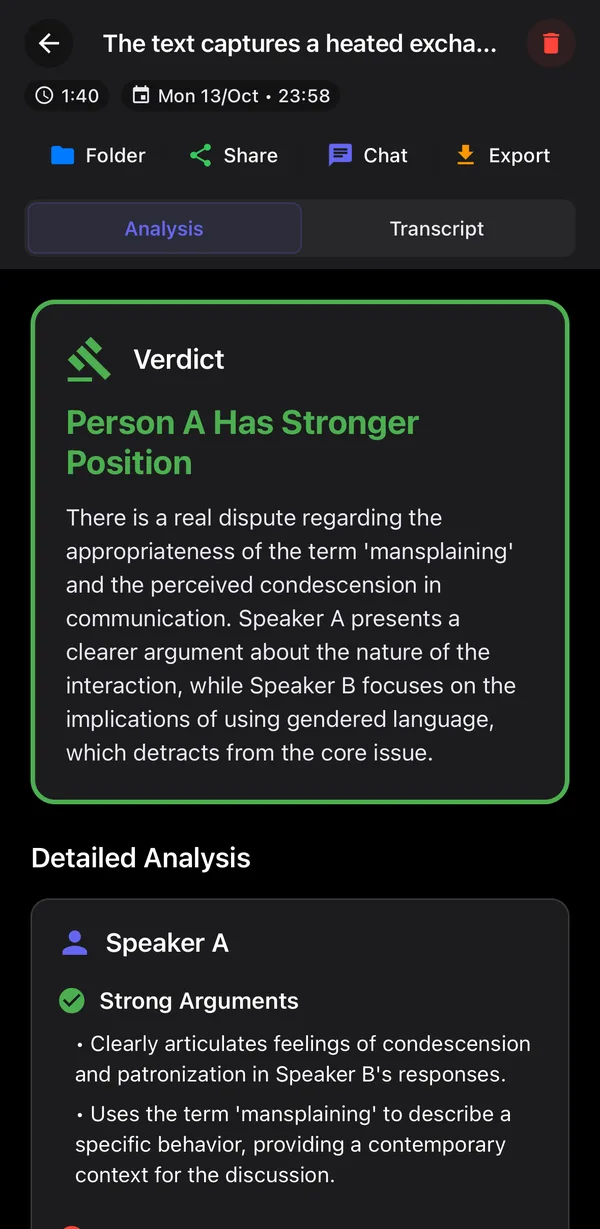
Type both sides and get a fair verdict, with the fallacies on each side. Free.
Questions people ask
What are the most important fair fighting rules?
If you only adopt three: keep to one topic, complain about behavior instead of attacking character, and take a time-out with a set return time when either person is overwhelmed. Those three prevent most fights from spiraling.
Are fair fighting rules only for couples?
No. They were popularized in couples therapy, but the same rules work for roommates, siblings, parents and teens, and coworkers. Any two people who need to keep living or working together after the argument can use them.
Is it fair to walk away during an argument?
Taking a break is fair if you say you need one and when you will return. Walking out without a word, or going silent for days, is not a time-out. It leaves the other person with no way to finish the conversation.
What if my partner refuses to follow the rules?
Keep following them yourself and name breaks calmly. If one person repeatedly uses contempt, threats or intimidation, the issue is bigger than rules, and a couples therapist or individual counselor can help you decide what to do next.
Sources
- Therapist Aid: Fair Fighting Rules worksheet
- The Gottman Institute: The Four Horsemen, The Antidotes
- The Gottman Institute: How to Fight Smarter, Soften Your Start-Up
- The Gottman Institute: Who Has to Calm Down First?
- The Gottman Institute: The Magic Relationship Ratio, According to Science
- The Gottman Institute: Flooding and Conflict Avoidance
Keep reading
- GuidesThe Gottman Four HorsemenThe Gottman Four Horsemen are four ways of fighting that John Gottman's research links to relationships falling apart: criticism, contempt, defensiveness and stonewalling. Each has an antidote: a gentle start-up, a culture of appreciation, taking responsibility, and a real break to calm down. How you fight matters more than whether you fight.
- GuidesI StatementsI statements are sentences that describe your own feelings and needs instead of judging the other person, for example 'I feel overwhelmed when the dishes pile up, and I need a hand tonight' instead of 'You never help.' They raise a problem without putting the listener on trial, so it can be solved.
- GuidesEmotional FloodingEmotional flooding is physical and emotional overwhelm during conflict: your heart races, stress hormones surge, and you lose the ability to listen or think flexibly. People who are flooded tend to attack or shut down. The fix is to notice the signs early, call a break of at least 20 minutes, and actually calm your body before talking again.
- GuidesHow to Stop ArguingTo stop arguing, pause when either of you is too upset to think, take a break of at least 20 minutes with a set time to come back, then restart gently on one issue. Understand the other person's side before persuading. If it's the same fight on repeat, talk about why it matters to each of you.
- FallaciesWhataboutismWhataboutism is answering a criticism with a counter-accusation instead of a response: 'What about the time you...' The other person's faults may be real, but they don't make the original criticism wrong. It's a way of changing the subject, and in personal arguments it turns one problem into a contest over who has done worse.
- GuidesContempt in RelationshipsContempt in relationships is treating your partner as beneath you: mockery, sneering, name-calling, eye-rolling, sarcasm meant to wound. The Gottman Institute calls it the single greatest predictor of divorce among the Four Horsemen. It grows from long-held resentment, and the antidote is to state your needs directly and rebuild appreciation.
The ArgueResolver app · iPhone and Android
Record the argument. Get the verdict.
ArgueResolver listens while you talk it out, works out who said what, and gives an honest verdict on what was actually said, with compromises and steps to fix it.
Free to start · See how it works