Emotional Flooding: Why You Shut Down in Arguments and How to Calm Down
Also called: flooding in relationships, diffuse physiological arousal, getting flooded
Updated · 5 min read · 5 sources
The short answer
Emotional flooding is physical and emotional overwhelm during conflict: your heart races, stress hormones surge, and you lose the ability to listen or think flexibly. People who are flooded tend to attack or shut down. The fix is to notice the signs early, call a break of at least 20 minutes, and actually calm your body before talking again.
What is emotional flooding?
Emotional flooding is what happens when an argument triggers your body's threat response. John Gottman's work describes it as a state of physical and emotional overwhelm (researchers also call it diffuse physiological arousal) in which it becomes hard to listen or think clearly. Your body is preparing to fight, flee or freeze, even though the threat is a conversation about the in-laws.
The Gottman Institute describes the experience as falling into a rabbit hole of rage, hurt, panic or fear. Your muscles clench, you feel hot, your stomach turns, and your partner's words stop making sense. In that state the thinking part of the brain, the part that can see gray areas and the other side, is far less available.
Signs you're getting flooded
Flooding is easiest to manage when you catch it early. A Gottman Institute article lists warning signs like these:
- Your heart rate is climbing, or you can feel your pulse pounding.
- You are holding your breath or breathing fast and shallow.
- You have stopped really listening and are just waiting to reply.
- You can't find words, or you lose your train of thought.
- Your voice is getting louder and sharper.
- You feel defensive instead of curious.
- Your jaw, fists, shoulders or brow are tight.
- You feel like a deer in the headlights, or slightly sick or light-headed.
What it sounds like
What flooding does to an argument
Once one person is flooded, the conversation is effectively over, even if words keep coming. The Gottman Institute describes what happens: it gets harder to process information, defensiveness goes up, creative problem-solving goes down, and so does the ability to listen and empathize.
Flooded people tend to go one of two ways. Some fight harder, with a cascade of words they regret later. Others go silent and withdraw, which is stonewalling. And because the other person sees the attack or the silence, they often get flooded too. That is how a disagreement about the dishwasher turns into a fight about the whole relationship.
Why the break needs to be 20 minutes
The Gottman Institute recommends a break of at least 20 minutes, because that is about how long the body needs to calm down. It describes a study in its research lab in which couples were interrupted fifteen minutes into an argument and told the equipment needed adjusting. They read magazines for half an hour without discussing the issue. When they resumed, their heart rates were significantly lower and their conversation was more positive and productive.
Nothing about the couples' problem had changed. Their bodies had.
How to take a break that actually works
A break can calm things down or feel like walking out. The difference is in how it is set up:
- Agree in a calm moment on a signal either of you can use: a word, a phrase or a raised hand.
- Say you are overwhelmed rather than telling your partner they are. The Gottman Institute advises against "you're getting flooded", which can sound like blame.
- Say when you will come back, and come back. Whoever asks for the break takes responsibility for returning.
- Spend the time soothing your body, not rehearsing your argument or replaying what they said.
- Try slow, even breathing, tensing and relaxing tight muscles, a walk, music or a book.
When your partner is the one who's flooded
If your partner asks for a break, take it, even if you feel fine. The Gottmans' advice is to honor the request rather than push on. Pushing a flooded person for an answer does not get you an answer; it gets you more silence or more heat.
If they go quiet without asking, you can offer the break yourself: "It seems like a lot right now. Let's take twenty minutes and come back to it." Then use the twenty minutes to calm down yourself. The fair fighting rules guide covers how to set this up as a standing agreement.
Being flooded is not a character flaw
Some people flood faster than others, and what conflict looked like in the home you grew up in can play a part. The Gottman Institute notes that partners who handle conflict differently can badly misread each other: one sees the other's withdrawal as not caring, the other experiences the conversation as overwhelming. Learning each other's signs, and agreeing on breaks, works better than deciding who is the problem. If you are often overwhelmed in arguments, a therapist can help you build these skills.
What to say
I'm getting overwhelmed and I want to get this right. Can we stop for twenty minutes and come back at seven?
Okay, let's pause. I'll be in the living room when you're ready.
It seems like this is a lot right now. Let's take a break and pick it up after dinner.
Thanks for the break. I'm calmer now. Can I start with what I actually need?
In an argument right now?
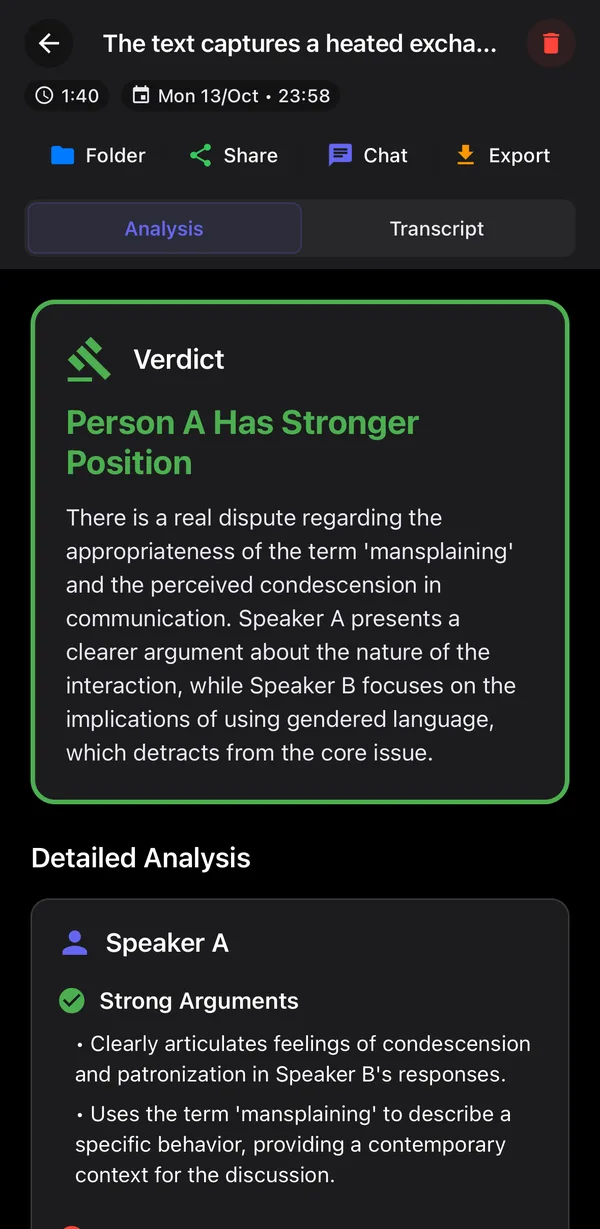
Type both sides and get a fair verdict, with the fallacies on each side. Free.
Questions people ask
What is emotional flooding?
A state of physical and emotional overwhelm during conflict, with a racing heart and stress hormones, in which it becomes hard to listen, think clearly or respond calmly.
How long does it take to calm down from flooding?
The Gottman Institute recommends a break of at least 20 minutes, spent doing something soothing rather than replaying the argument.
Is emotional flooding the same as stonewalling?
No. Flooding is the internal state; stonewalling is one way people respond to it, by shutting down and withdrawing. Some flooded people attack instead.
What should I do during a break?
Something that calms your body: slow breathing, relaxing tense muscles, a walk, music or reading. Avoid rehearsing your argument, which keeps you flooded.
Sources
- The Gottman Institute: Making Sure Emotional Flooding Doesn't Capsize Your Relationship
- The Gottman Institute: Who Has to Calm Down First? Emotional regulation during an argument
- The Gottman Institute: Help! Someone Told Me I'm Stonewalling
- The Gottman Institute: The Four Horsemen: Stonewalling
- The Gottman Institute: The Four Horsemen: The Antidotes
Keep reading
- GuidesStonewalling in RelationshipsStonewalling is when one person in an argument shuts down and stops responding: no eye contact, no answers, eyes on a phone, or walking off without a word. It is one of John Gottman's Four Horsemen. It usually happens when someone feels overwhelmed, and what helps is an agreed break, not more pressure.
- GuidesThe Gottman Four HorsemenThe Gottman Four Horsemen are four ways of fighting that John Gottman's research links to relationships falling apart: criticism, contempt, defensiveness and stonewalling. Each has an antidote: a gentle start-up, a culture of appreciation, taking responsibility, and a real break to calm down. How you fight matters more than whether you fight.
- GuidesHow to Stop ArguingTo stop arguing, pause when either of you is too upset to think, take a break of at least 20 minutes with a set time to come back, then restart gently on one issue. Understand the other person's side before persuading. If it's the same fight on repeat, talk about why it matters to each of you.
- GuidesFair Fighting RulesFair fighting rules are agreements two people make about how they will argue: one topic at a time, complaints about behavior instead of attacks on character, no contempt or name-calling, real listening before rebutting, and a time-out when either person is too upset to think. The goal is to solve the problem without wounding each other.
- GuidesThe Silent TreatmentThe silent treatment is deliberately refusing to talk to someone, or acting as if they are not there, after a conflict. Sometimes it is a clumsy way of coping with overwhelming feelings; sometimes it is used to punish or control. Intent and pattern make the difference, and they decide how you should respond.
The ArgueResolver app · iPhone and Android
Record the argument. Get the verdict.
ArgueResolver listens while you talk it out, works out who said what, and gives an honest verdict on what was actually said, with compromises and steps to fix it.
Free to start · See how it works