What does AITA mean?
AITA stands for "Am I the Asshole?" It is how people ask strangers on the internet to judge their own behavior in a conflict, made popular by the Reddit forum r/AmItheAsshole. Someone describes what happened, and readers answer with a short verdict code: NTA (not the asshole), YTA (you're the asshole), ESH (everyone sucks here) or NAH (no assholes here).
The appeal is the honesty. Friends tend to take your side; strangers who only care about what you did will tell you when you were wrong. Here is every code you will see in those threads:
| Code | Stands for | What it means |
|---|---|---|
| AITA | Am I the Asshole?The question itself: did I behave badly in this situation? | The question itself: did I behave badly in this situation? |
| AITAH | Am I the Asshole Here?The same question with "here" on the end. | The same question with "here" on the end. |
| WIBTA | Would I Be the Asshole?Asked before doing something, about a choice you haven't made yet. | Asked before doing something, about a choice you haven't made yet. |
| NTA | Not the AssholeYou're not in the wrong. Someone else is, or your choice was reasonable. | You're not in the wrong. Someone else is, or your choice was reasonable. |
| YTA | You're the AssholeYou're in the wrong on the main issue. | You're in the wrong on the main issue. |
| ESH | Everyone Sucks HereBoth sides behaved badly, not just one. | Both sides behaved badly, not just one. |
| NAH | No Assholes HereNobody did anything wrong; it's a clash of needs or preferences. | Nobody did anything wrong; it's a clash of needs or preferences. |
| INFO | Not enough infoA detail is missing that the verdict depends on. | A detail is missing that the verdict depends on. |
| YWBTA / YWNBTA | You Would (Not) Be the AssholeThe answers to a WIBTA question. | The answers to a WIBTA question. |
How AITA verdicts work
The verdict is about behavior in this situation, not about whether someone is a good person. You can be kind, generous and still YTA for one thing you did on Tuesday.
NTA or ESH? NTA means the other side carries the blame, or nobody did anything wrong to you. ESH means both of you did something wrong, even if not equally. Snapping back after being insulted often turns an NTA into an ESH.
ESH or NAH? ESH needs bad behavior on both sides. NAH is the opposite: both people want reasonable things that happen to conflict (one wants to spend the holidays with their family, the other with theirs), and nobody behaved badly.
When it's INFO. If the verdict turns on something the story doesn't say (Did you agree to this beforehand? Did you know about the allergy?), the honest answer is to ask.
Get an AITA verdict without posting it
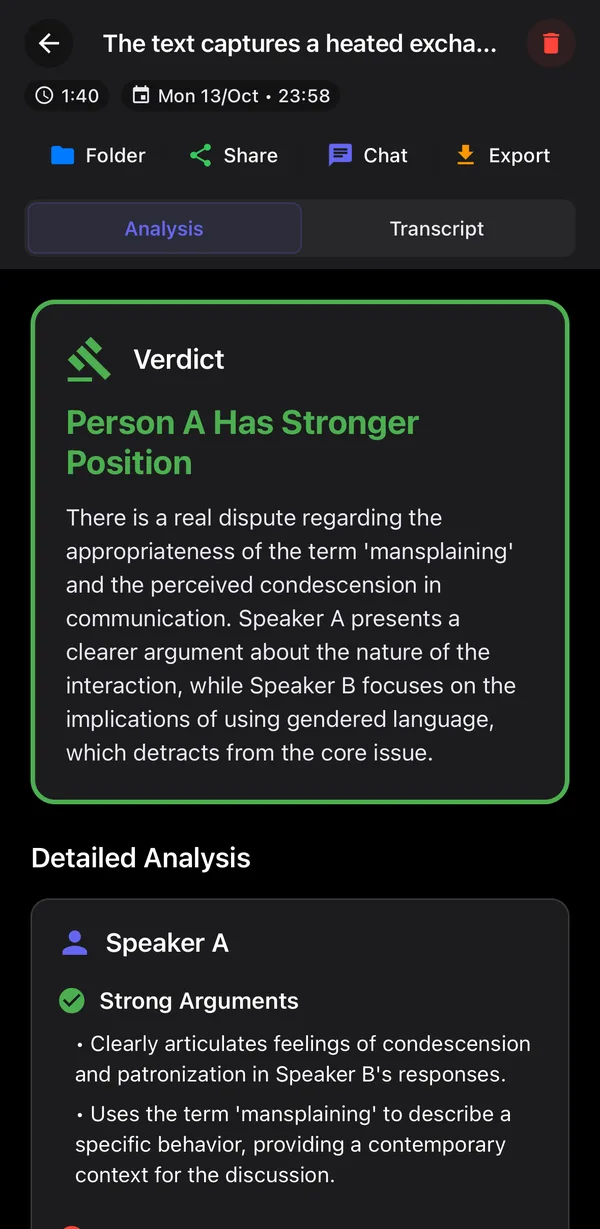
Posting your fight in public isn't always an option, especially when the other person might read it. The judge at the top of this page gives you the same kind of verdict privately: NTA, YTA, ESH, NAH or INFO, with what counts in your favor, what counts against you, how the other person may see it, and what you could say to them. Nothing is posted, and we don't save your story.
It is honest by design. If your own account shows you were in the wrong, it will say so, kindly and plainly. It only hears your side, though, so treat it as a second opinion. For a disagreement where both of you want a fair call, put both sides into the Who's right? judge instead, or record the real conversation with the app.
How to tell your story so the verdict is fair
- Include your own part. What you said and did, especially the parts you're not proud of. A verdict on a story that leaves them out isn't worth much.
- Report words, not interpretations. "She said I always ruin dinner" lets the judge weigh it; "she was horrible to me" doesn't.
- Say what happened before. Agreements, earlier fights, and what each of you knew at the time often decide between NTA and ESH.
- Ask one question. "AITA for leaving the party early?" gets a clearer answer than a list of grievances.
- Watch for the moves that sink a case. Telling the other person they're overreacting instead of answering the point, or changing the subject, usually counts against you.