Red Herring Fallacy: Definition, Examples and How to Get Back on Track
Also called: red herring, irrelevant conclusion, changing the subject
Updated · 5 min read · 4 sources
The short answer
A red herring fallacy is a reply that switches to a different topic, one that sounds related but doesn't answer the question, so the original point quietly drops out. The new topic may be important, even true. It still leaves the first issue unresolved. The name comes from a story about using a smelly fish to throw hounds off a trail.
What is a red herring fallacy?
A red herring fallacy distracts from the issue being discussed by introducing another one. The distraction usually has some emotional pull: a grievance, a sad story, a more interesting question. While everyone follows the new scent, the original question goes unanswered, and often nobody notices until much later.
The image comes from hunting. The English writer William Cobbett told a story about dragging a strong-smelling smoked herring across a trail so the hounds would lose the hare. The story is probably invented, but the name stuck, and today a red herring also means a misleading clue in a mystery novel. In logic it is a fallacy of relevance: the new point doesn't bear on the old one.
When is changing the subject a red herring?
Conversations drift, and not every new topic is a dodge. The test is relevance: does the new point help settle the original question? 'Before we book the trip, we need to talk about the car repair bill' is a new topic, but it bears directly on whether the trip is affordable. That's not a red herring.
It becomes a red herring when the new topic is offered as if it answered the original one, or when it reliably appears whenever the original one gets uncomfortable. A useful habit is to ask, out loud and without sarcasm: 'How does that connect to what we were talking about?' Sometimes there's a real connection you missed. Sometimes there isn't, and the question makes that visible.
Red Herring Fallacy examples
Why people reach for red herrings
Most red herrings in personal arguments aren't calculated. They come from feeling cornered. If a question carries guilt or embarrassment, the mind looks for an exit, and a different topic, especially one where you feel wronged, is the nearest door. That's why red herrings so often look like deflection: the new subject puts the other person on the defensive.
Tiredness and stress make it worse. If you notice that every serious conversation in your house turns into a different conversation, the pattern is worth naming gently, outside the heat of a particular fight.
Red herring examples in everyday arguments
These openers often signal that the conversation is about to change direction without resolving anything:
- 'Do you know how hard my week has been?'
- 'Why are you bringing this up now?'
- 'Speaking of money, what about your car payment?'
- 'Honestly, the real problem is your sister.'
- 'Everybody's stressed right now.'
- 'Can we talk about something that actually matters?'
How to get back on track
Don't argue about whether the new topic matters. It might. Acknowledge it, park it, and return: 'That's worth talking about, and I want to. First, can we finish the question about the bill?' Writing the parked topic down, even on a phone note, shows you're not dismissing it.
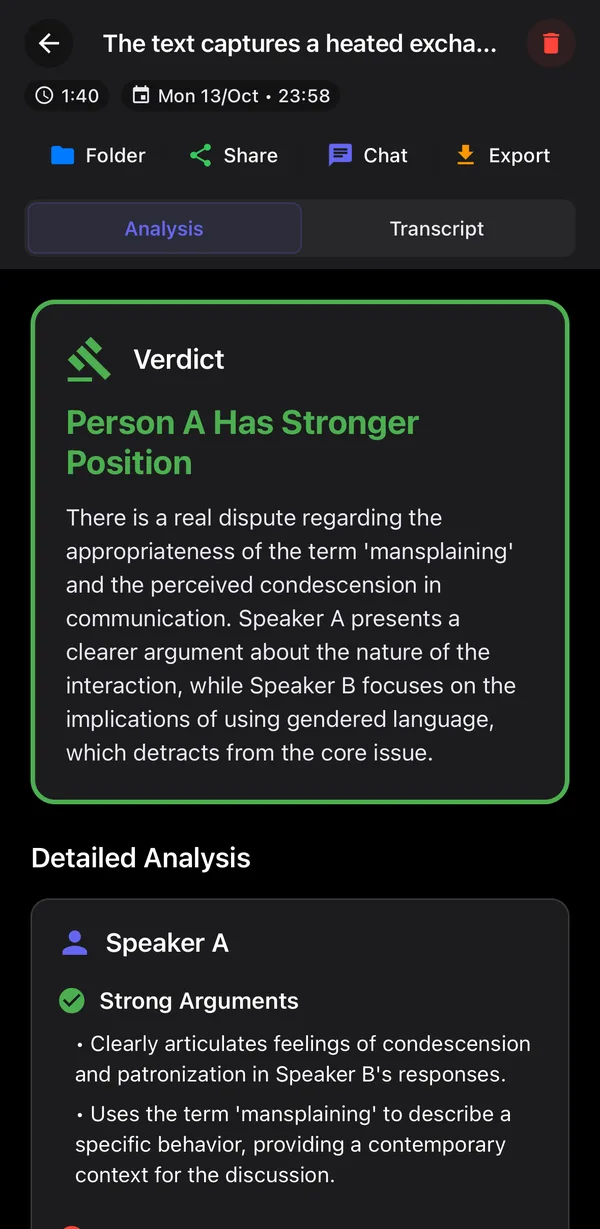
Agreeing on one topic per conversation is one of the classic fair fighting rules for exactly this reason. If you can't tell whether a reply answered the question, paste the exchange into our free argument judge; it checks whether each reply engages with the point that was actually raised.
Red herring vs. straw man vs. whataboutism
These three are cousins, and it helps to keep them apart. A straw man stays on your topic but distorts your position. A red herring leaves your topic for a different one. Whataboutism is a particular kind of red herring that changes the subject to the other person's faults: 'What about the time you...'
All three leave the original question unanswered, so the fix is the same: restate the question and ask for an answer to it.
What to say
That sounds like a rough week, and I want to hear about it. First, can we sort out the charge?
Help me see how that connects to what we were talking about. Is it related?
Let's write that one down so we don't lose it, and come back to it tonight. Right now I'd still like an answer on this.
You're right, I changed the subject. The honest answer to your question is...
In an argument right now?
Type both sides and get a fair verdict, with the fallacies on each side. Free.
Questions people ask
What is an example of a red herring fallacy?
Someone asks why the rent is late and the reply is 'Do you have any idea what my boss did today?' The boss story may be real, but it doesn't answer the question about the rent.
Is a red herring always intentional?
No. In personal arguments it is often a reflex from feeling cornered or guilty. Naming it calmly works better than accusing someone of a deliberate trick.
What is the difference between a red herring and a straw man?
A straw man keeps the topic but misrepresents your position. A red herring moves to a different topic. Both avoid your actual point.
What does red herring mean in a mystery?
In fiction a red herring is a clue planted to lead readers toward the wrong suspect. It's the same idea: something attention-grabbing that pulls you away from what matters.
Sources
Keep reading
- FallaciesWhataboutismWhataboutism is answering a criticism with a counter-accusation instead of a response: 'What about the time you...' The other person's faults may be real, but they don't make the original criticism wrong. It's a way of changing the subject, and in personal arguments it turns one problem into a contest over who has done worse.
- FallaciesStraw Man FallacyA straw man fallacy is when someone replaces your actual point with a weaker or more extreme version of it, then argues against that version instead. It feels like a win because the distorted claim is easy to knock down, but your real point was never answered. In personal arguments it often starts with 'So what you're saying is...'
- GuidesDeflection in ArgumentsDeflection is redirecting attention away from something uncomfortable, usually your own behavior, so it never gets discussed. In an argument it looks like changing the subject, bringing up an old fight, joking it off or turning the question back on the other person. Deflection protects the person for a moment and leaves the problem untouched.
- GuidesFair Fighting RulesFair fighting rules are agreements two people make about how they will argue: one topic at a time, complaints about behavior instead of attacks on character, no contempt or name-calling, real listening before rebutting, and a time-out when either person is too upset to think. The goal is to solve the problem without wounding each other.
- FallaciesTu Quoque FallacyTu quoque (Latin for 'you too') is a fallacy that dismisses a criticism by pointing out that the critic does the same thing: 'You can't tell me to stop vaping, you smoked for ten years.' The critic may well be a hypocrite, but that doesn't make the advice wrong. It's also called the appeal to hypocrisy.
The ArgueResolver app · iPhone and Android
Record the argument. Get the verdict.
ArgueResolver listens while you talk it out, works out who said what, and gives an honest verdict on what was actually said, with compromises and steps to fix it.
Free to start · See how it works