Stonewalling in Relationships: What It Is, Examples and How to Respond
Also called: shutting down in an argument, emotional withdrawal
Updated · 5 min read · 4 sources
The short answer
Stonewalling is when one person in an argument shuts down and stops responding: no eye contact, no answers, eyes on a phone, or walking off without a word. It is one of John Gottman's Four Horsemen. It usually happens when someone feels overwhelmed, and what helps is an agreed break, not more pressure.
What is stonewalling?
Stonewalling is withdrawing from a conversation while it is still happening. The listener closes off, stops responding and builds, in effect, a wall between themselves and the person talking. The Gottman Institute lists the typical moves: tuning out, turning away, acting busy, or getting absorbed in something else.
It is the fourth of Gottman's Four Horsemen, the communication habits linked to relationships breaking down. It rarely comes first. It tends to appear after criticism, defensiveness and contempt have made the conversation feel unbearable, and once it shows up it easily becomes a habit.
Signs of stonewalling
From the outside, stonewalling looks like indifference. From the inside, it often feels like panic. These are the most common signs:
- One-word answers, or no answer at all, while the other person is clearly waiting for one.
- Eyes on the phone, the TV or the laptop as soon as the topic comes up.
- A blank or frozen face, arms crossed, body turned away.
- "Fine." "Whatever." "I don't know." said to end the conversation, not to answer it.
- Leaving the room without saying why or when you will come back.
- Suddenly very busy: dishes, emails, the dog.
What it sounds like
Why people stonewall
Most stonewalling is not a strategy. The Gottman Institute describes it as a response to being physiologically flooded: heart rate up, stress hormones in the bloodstream, the body in fight, flight or freeze mode. A Gottman article for people accused of stonewalling notes that someone in that state can have a heart rate well over 100 beats a minute and feel mentally paralyzed. Our guide to emotional flooding covers this in detail.
It also tends to run in a loop. One partner pushes for an answer ("Talk to me! What are you thinking?"), the other freezes more, which makes the first push harder. The Gottman Institute reports that most of the stonewallers observed in its research lab were men, though anyone can do it.
Stonewalling, taking a break and the silent treatment
Taking a break is not stonewalling. A healthy break is announced, has an end time, and ends with you coming back to the conversation: "I'm too wound up to talk well. Can we pick this up at nine?"
The silent treatment looks similar but differs in intent. A Gottman therapist puts it this way: stonewalling is a flooded person protecting themselves, while the silent treatment is a deliberate refusal to acknowledge someone, often to punish them or win the fight. Both hurt the person on the receiving end, and the first step out of both is the same: a real, agreed pause.
Is stonewalling a form of abuse?
Occasional shutting down because you are overwhelmed is not abuse. It is a common, fixable problem. But withdrawal can be used to control. A 2026 review in Current Opinion in Psychology argues that silent treatment, stonewalling and emotional withdrawal, when used to ignore and exclude a partner, are a form of partner maltreatment, especially alongside coercive control that cuts someone off from friends and family.
Ask what the silence is for. If it ends when the person has calmed down, it is a skills problem. If it lasts days, is used to make you give in, or comes with threats or isolation, it is a pattern worth talking through with someone outside the relationship.
How to respond to stonewalling
Pushing harder almost never works, because a flooded person cannot take in more words. What does work:
- Stop the conversation instead of escalating it. Name what you see without blame: "It seems like this is too much right now."
- Offer a break with a time to come back, so the pause is not a dead end.
- In a calm moment, agree on a break signal you both honor: a word, a phrase, even a raised hand.
- Use the break to calm yourself too, not to rehearse your next point.
- When you come back, open gently with one specific concern. If the pattern keeps repeating, a couples therapist can help you both practice.
If you're the one who stonewalls
Learn your early warning signs: a racing heart, a tight jaw, holding your breath, struggling to find words. When you notice them, say so before you go silent: "This matters to me, and I'm getting overwhelmed. I need twenty minutes, then I'll come back." The Gottman Institute recommends a break of at least 20 minutes, because that is about how long the body takes to calm down. Then keep your promise and return. Coming back is what turns a shutdown into a break.
What to say
It looks like this is a lot right now. Let's take a break and come back to it at eight.
I'm not ignoring you. I'm overwhelmed. Give me twenty minutes and I'll come back.
Thanks for giving me time. Can we start with just the part about the money?
When we fight, I push and you go quiet. Can we agree on a signal for taking a break so neither of us feels shut out?
In an argument right now?
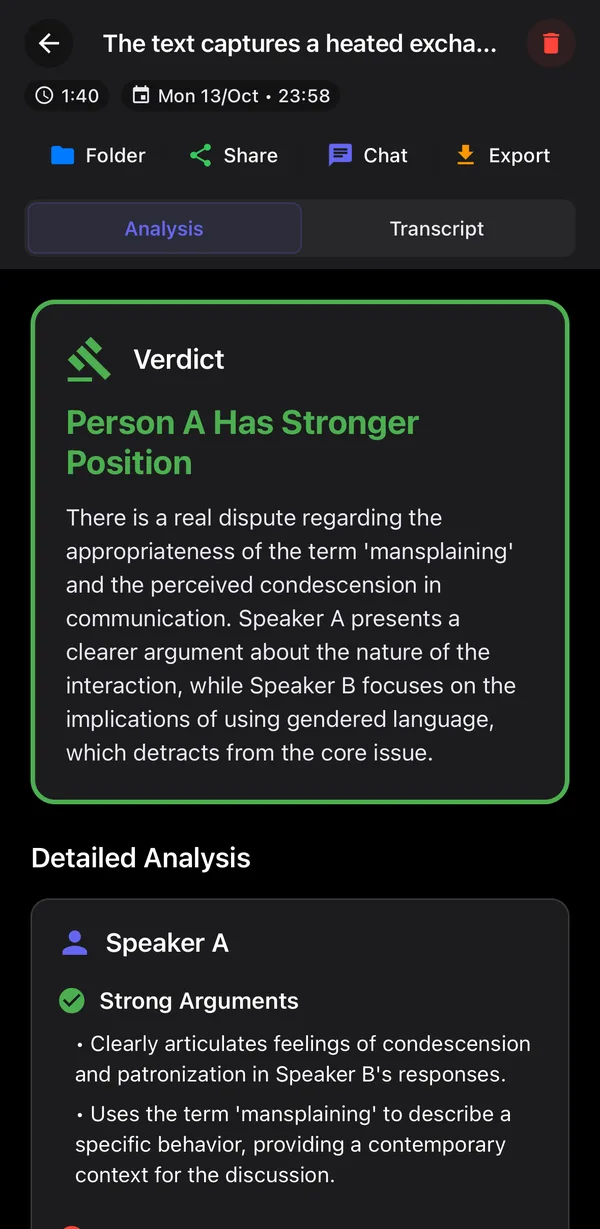
Type both sides and get a fair verdict, with the fallacies on each side. Free.
Questions people ask
What does stonewalling mean in a relationship?
It means one partner withdraws during a conflict and stops engaging: no responses, no eye contact, turning away or leaving without explanation. It is one of Gottman's Four Horsemen.
How long should a break last to stop stonewalling?
The Gottman Institute recommends at least 20 minutes, spent doing something calming rather than replaying the argument, and then coming back to the conversation.
Is stonewalling the same as the silent treatment?
They look alike, but stonewalling is usually a flooded person shutting down, while the silent treatment is a deliberate refusal to speak, often to punish. Both need a pause and a return to the conversation.
Is stonewalling abuse?
Occasional shutting down is not abuse. Silence used for days to punish, control or isolate someone is a different matter and can be part of emotional abuse.
Sources
- The Gottman Institute: The Four Horsemen: Stonewalling
- The Gottman Institute: Help! Someone Told Me I'm Stonewalling
- The Gottman Institute: Stonewalling vs The Silent Treatment: Are They the Same?
- Dvir, Besikci and Williams (2026), The quiet cruelty: Ostracism as intimate partner violence, Current Opinion in Psychology (PubMed)
Keep reading
- GuidesThe Gottman Four HorsemenThe Gottman Four Horsemen are four ways of fighting that John Gottman's research links to relationships falling apart: criticism, contempt, defensiveness and stonewalling. Each has an antidote: a gentle start-up, a culture of appreciation, taking responsibility, and a real break to calm down. How you fight matters more than whether you fight.
- GuidesEmotional FloodingEmotional flooding is physical and emotional overwhelm during conflict: your heart races, stress hormones surge, and you lose the ability to listen or think flexibly. People who are flooded tend to attack or shut down. The fix is to notice the signs early, call a break of at least 20 minutes, and actually calm your body before talking again.
- GuidesThe Silent TreatmentThe silent treatment is deliberately refusing to talk to someone, or acting as if they are not there, after a conflict. Sometimes it is a clumsy way of coping with overwhelming feelings; sometimes it is used to punish or control. Intent and pattern make the difference, and they decide how you should respond.
- GuidesDefensiveness in RelationshipsDefensiveness in relationships means protecting yourself from a complaint with excuses, counter-complaints or wounded innocence instead of hearing it. It is one of John Gottman's Four Horsemen, and nearly everyone does it. The antidote is to accept responsibility for at least part of the problem, which lets the conversation move forward.
- GuidesFair Fighting RulesFair fighting rules are agreements two people make about how they will argue: one topic at a time, complaints about behavior instead of attacks on character, no contempt or name-calling, real listening before rebutting, and a time-out when either person is too upset to think. The goal is to solve the problem without wounding each other.
The ArgueResolver app · iPhone and Android
Record the argument. Get the verdict.
ArgueResolver listens while you talk it out, works out who said what, and gives an honest verdict on what was actually said, with compromises and steps to fix it.
Free to start · See how it works