Passive Aggressive Behavior Examples: How It Sounds and How to Respond
Also called: passive aggression, passive aggressive communication
Updated · 5 min read · 3 sources
The short answer
Passive aggressive behavior is showing anger indirectly instead of saying it: a cold "I'm fine", a joke with a sting, a favor done badly on purpose, a loud sigh instead of a request. Common passive aggressive behavior examples include backhanded compliments, convenient forgetting and pointed silence. The fix is saying the feeling directly.
What does passive aggressive mean?
Passive aggressive means the anger is real but the delivery is indirect. The person is upset, does not say so, and lets it leak out in tone, timing, jokes or small acts of non-cooperation. The passive aggressive behavior examples below all share that shape: something hostile is communicated while the sender keeps the option of denying it.
It often starts with good intentions. The Gottman Institute describes conflict avoidance as a legitimate style that many happy couples use: let small things slide, skip the long arguments. The risk is that big issues get ignored too, the anger keeps growing, and it comes out sideways as passive aggression. So the person doing it is often not scheming. They have just never felt safe saying "I'm angry about this" out loud.
Passive aggressive behavior examples
These are the versions that come up most in everyday arguments at home and at work:
- "I'm fine."
- Said through a tight jaw, followed by an evening of short answers. The words say fine; everything else says the opposite.
- "Do whatever you want."
- Permission that is really a warning. If you take it at face value, you will hear about it later.
- The backhanded compliment
- "Nice, you actually cooked tonight." The praise carries the criticism inside it.
- The joke with a sting
- A dig at someone's cooking, job or family, followed by "relax, I'm kidding" when they react. The Gottman Institute names humor that hides hostility, and then calling the other person too sensitive, as a classic sign.
- Convenient forgetting
- The errand they never wanted to run somehow keeps slipping their mind.
- Doing it badly on purpose
- Agreeing to load the dishwasher and loading it so poorly that nobody asks again.
- Sighs, slams and stomps
- Loud cabinet doors instead of "I need help in the kitchen."
- The note or the group chat
- A sticky note on the fridge or a message to the whole house about "some people" instead of a word with the one person involved.
- The silent treatment
- Refusing to talk while insisting nothing is wrong. See our guide to the silent treatment.
- "Per my last email"
- The workplace version: polite words, pointed meaning, and usually the boss in copy.
What it sounds like
Why people act passive aggressive
Passive aggression usually grows where direct anger feels risky. Someone may have grown up in a home where conflict was loud and frightening, or where nobody fought at all. They may believe the other person will not listen anyway, or feel they have less power in the relationship. Indirect anger lets them protest without the danger of an open fight.
It is a communication habit, not a diagnosis. Labeling someone "a passive aggressive person" tends to start a new fight. Naming the specific behavior and the effect it had is more useful.
Is it passive aggression or just a bad day?
Not every short reply is a coded message. People get tired, distracted and quiet for reasons that have nothing to do with you. Before you decide a comment was passive aggressive, look for a pattern: the same digs repeating, words and tone that keep contradicting each other, denials that do not match what you see. If you are unsure, ask once, plainly: "You seem upset. Is something going on between us?"
How to respond to passive aggressive behavior
The goal is to make it safe to say the anger directly, so the indirect version is no longer needed. The Gottman Institute suggests choosing a calm moment and using a gentle start-up: "I feel ___ about ___ and I need ___." Talk about the pattern, not only the topic it is attached to.
If the reply is "I was only joking", do not argue about whether it was a joke. Say that it did not land as one: "Maybe it was meant as a joke, but it hurt. If you're annoyed about my cooking, I'd rather you just tell me." That keeps the focus on what you need instead of turning it into an accusation of lying. Our guide to I statements has more ways to phrase this.
If you recognize yourself
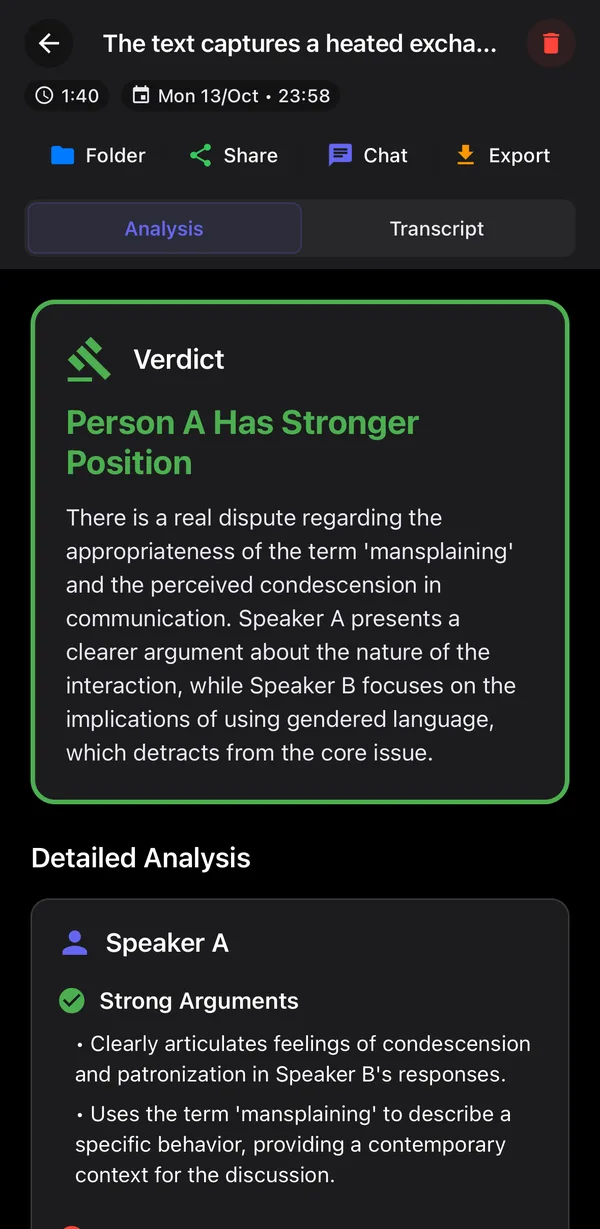
Most of us do some of this sometimes. The way out is to say the thing you are hinting at. Pick the one specific issue, say how you feel about it and ask for one concrete change: "I'm annoyed that I've cooked every night this week. Can you take Tuesday and Thursday?" It feels exposed at first. It also gets you what you actually want far more often than a sigh does. If you want a neutral read on whether your words and your message match, you can paste the exchange into our free argument judge.
What to say
Okay. If something's bothering you, I'd rather hear it now than guess. I'm around after dinner.
Maybe that was meant as a joke, but it didn't feel like one. If something's bugging you, tell me straight.
I saw the note. If it's about my dishes, I'd rather talk about it directly. What would work for you?
That came out snippy. What I actually mean is I'm tired of cooking every night, and I need help this week.
In an argument right now?
Type both sides and get a fair verdict, with the fallacies on each side. Free.
Questions people ask
What are examples of passive aggressive behavior?
"I'm fine" said angrily, backhanded compliments, jokes with a sting, convenient forgetting, doing a task badly on purpose, loud sighing, notes or group messages instead of direct talk, and the silent treatment.
Is passive aggressive behavior a form of manipulation?
It can be used that way, but often it is a habit of avoiding open conflict. The effect is similar either way: the real issue stays hidden, so it cannot be solved.
What is the difference between passive and passive aggressive?
A passive person does not express their needs or anger at all. A passive aggressive person does express anger, just indirectly, through tone, timing, jokes or small acts of resistance.
How do I respond when they say they were only joking?
Skip the debate about intent. Say how it landed ("it didn't feel like a joke") and invite them to tell you directly if something is bothering them.
Sources
Keep reading
- GuidesThe Silent TreatmentThe silent treatment is deliberately refusing to talk to someone, or acting as if they are not there, after a conflict. Sometimes it is a clumsy way of coping with overwhelming feelings; sometimes it is used to punish or control. Intent and pattern make the difference, and they decide how you should respond.
- GuidesI StatementsI statements are sentences that describe your own feelings and needs instead of judging the other person, for example 'I feel overwhelmed when the dishes pile up, and I need a hand tonight' instead of 'You never help.' They raise a problem without putting the listener on trial, so it can be solved.
- GuidesContempt in RelationshipsContempt in relationships is treating your partner as beneath you: mockery, sneering, name-calling, eye-rolling, sarcasm meant to wound. The Gottman Institute calls it the single greatest predictor of divorce among the Four Horsemen. It grows from long-held resentment, and the antidote is to state your needs directly and rebuild appreciation.
- GuidesDeflection in ArgumentsDeflection is redirecting attention away from something uncomfortable, usually your own behavior, so it never gets discussed. In an argument it looks like changing the subject, bringing up an old fight, joking it off or turning the question back on the other person. Deflection protects the person for a moment and leaves the problem untouched.
- GuidesThe Gottman Four HorsemenThe Gottman Four Horsemen are four ways of fighting that John Gottman's research links to relationships falling apart: criticism, contempt, defensiveness and stonewalling. Each has an antidote: a gentle start-up, a culture of appreciation, taking responsibility, and a real break to calm down. How you fight matters more than whether you fight.
The ArgueResolver app · iPhone and Android
Record the argument. Get the verdict.
ArgueResolver listens while you talk it out, works out who said what, and gives an honest verdict on what was actually said, with compromises and steps to fix it.
Free to start · See how it works