Gaslighting Examples: Phrases, Signs and How It Differs From a Normal Fight
Also called: gaslighting, what is gaslighting, gaslighting phrases
Updated · 5 min read · 4 sources
The short answer
Gaslighting is a pattern of manipulation that makes someone doubt their own memory, perception or sanity. Gaslighting examples include "That never happened", "You're too sensitive" and "You're imagining things", used again and again to override what you know you saw. One disagreement about the facts is not gaslighting; a repeated pattern that leaves you doubting yourself is.
What is gaslighting?
Gaslighting is a form of emotional abuse in which one person repeatedly denies, twists or dismisses another person's experience until that person starts to distrust their own mind. The gaslighting examples on this page all aim at the same target: not the topic of the argument, but your confidence in your own memory and judgment.
The name comes from the 1938 stage play Gas Light and the 1944 film Gaslight, in which a husband dims the gas lamps in the house and then insists his wife is imagining it. The National Domestic Violence Hotline describes gaslighting as an extremely effective form of emotional abuse, because once someone stops trusting their own perceptions, they rely more and more on the abuser to tell them what is real.
The word is also used loosely online for any lie or disagreement. Cleveland Clinic points out that real gaslighting is narrower: a pattern of manipulation repeated over time, not a single bad moment. A related tactic, DARVO, flips the roles of victim and offender when someone is confronted.
Gaslighting examples by tactic
The Hotline groups common gaslighting techniques into a few families. Here is how they sound in an ordinary home:
- Countering
- Questioning your memory even when you remember accurately: "You never remember things right. That's not how it went."
- Denying and "forgetting"
- Pretending a promise or event never happened: "I never said I'd pay you back. You're making that up."
- Trivializing
- Making your feelings seem silly: "You're going to cry over that? You're way too sensitive."
- Diverting
- Turning the question into one about your thinking: "Is this another crazy idea your sister put in your head?"
- Withholding
- Refusing to engage with the concern at all: "I'm not listening to this again. You're trying to confuse me."
- Shifting the blame
- Making you responsible for their behavior: "I only lied because you overreact to everything." See also blame shifting.
What it sounds like
Common gaslighting phrases
Any of these can be said innocently once. The warning sign is hearing them constantly, especially whenever you raise a concern:
- "That never happened."
- "You're crazy." "You sound unstable."
- "You're too sensitive." "You're overreacting."
- "It's all in your head."
- "Everyone agrees with me, not you."
- "You have a terrible memory, you know that."
- "I was just joking. Why can't you take a joke?"
Gaslighting or an honest disagreement?
People really do remember the same evening differently, and saying "that's not how I remember it" is not gaslighting. Neither is a single heated denial in the middle of a fight. Honest disagreements about facts can usually be settled: you check the texts, the calendar or the receipt, and someone says "oh, you're right."
Gaslighting looks different. The pattern repeats, the person never concedes even when shown evidence, and the conversation keeps moving from what happened to what is wrong with you: your memory, your sanity, your sensitivity. Over time you notice you apologize a lot, second-guess simple decisions and leave conversations more confused than you started. Cleveland Clinic notes that the person doing it may or may not realize it, but either way it is damaging.
Be careful with the label in your own fights, too. Calling a partner a gaslighter because they disagree with you is its own way of shutting the conversation down. Describe the behavior instead: "When I bring up the money, you tell me I'm imagining it, and I end up doubting myself."
Signs you may be being gaslit
The Hotline and Cleveland Clinic list similar warning signs. Ask yourself whether these sound familiar:
- You constantly second-guess yourself and ask whether you are too sensitive.
- You apologize often, even when you are not sure what you did wrong.
- You make excuses for the other person to friends and family.
- You feel confused after conversations, and you can't quite say why.
- You have started keeping things from people close to you to avoid explaining.
- You feel like a different, less confident person than you used to be.
What to do if you think you're being gaslit
Write things down when they happen: dates, what was said, what was agreed. Notes and saved messages are an anchor when your memory is being challenged. Talk to someone outside the relationship who knows you well, and notice whether their read matches yours.
In the moment, you do not have to win the argument about reality. You can step out of it: "We remember it differently. I'm not going to debate my own memory." If the pattern comes with control, isolation from friends or fear, treat it as abuse, not as a communication problem, and reach out for confidential support. A therapist can also help you rebuild trust in your own judgment.
What to say
We remember it differently. I'm confident in what I heard, and I'm not going to argue about my own memory.
Let's stay on the money. Whether I'm too sensitive isn't the question.
Here's the message from the fourth. Let's work from what it says.
When I bring up a concern, I'm often told I'm imagining it, and I end up doubting myself. I need us to deal with what I'm raising.
In an argument right now?
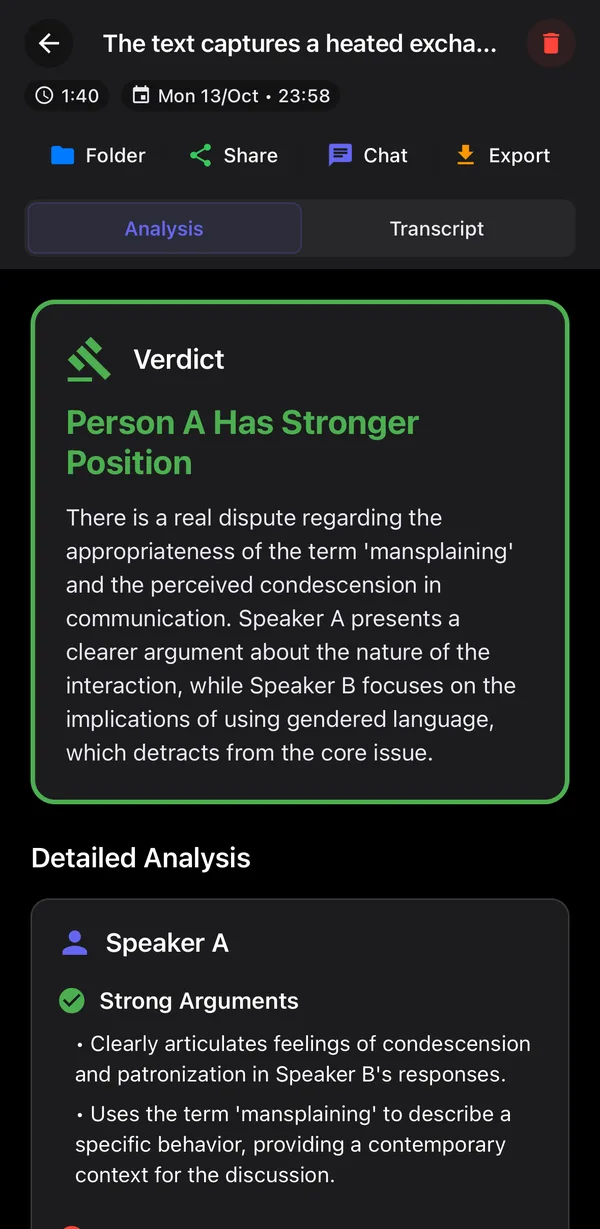
Type both sides and get a fair verdict, with the fallacies on each side. Free.
Questions people ask
What are common gaslighting phrases?
"That never happened", "You're too sensitive", "You're imagining things", "You have a bad memory" and "You're crazy" are among the most common, especially when they are used every time you raise a concern.
Can someone gaslight without realizing it?
Yes. Cleveland Clinic notes the person may or may not realize what they are doing. The effect on the person receiving it can be just as damaging either way.
Is gaslighting the same as lying?
No. A lie misstates a fact. Gaslighting is a repeated pattern aimed at making you distrust your own perception, so that you accept the other person's version of reality.
Is every disagreement about what happened gaslighting?
No. People remember things differently all the time. It becomes gaslighting when denial and attacks on your memory or sanity are a persistent pattern.
Sources
Keep reading
- GuidesDARVODARVO stands for Deny, Attack, and Reverse Victim and Offender. Psychologist Jennifer Freyd named it for a reaction people may show when confronted about wrongdoing: they deny it, attack the person raising it, and recast themselves as the real victim. Research finds it is common, shifts blame onto the confronter, and loses power once people recognize it.
- GuidesBlame ShiftingBlame shifting is moving responsibility for your own action onto someone else, so the conversation becomes about their fault instead of yours: "I only yelled because you provoked me." Everyone does it occasionally when they feel attacked. As a habit, blame shifting keeps problems unsolved and can slide into manipulation.
- GuidesDeflection in ArgumentsDeflection is redirecting attention away from something uncomfortable, usually your own behavior, so it never gets discussed. In an argument it looks like changing the subject, bringing up an old fight, joking it off or turning the question back on the other person. Deflection protects the person for a moment and leaves the problem untouched.
- GuidesThe Silent TreatmentThe silent treatment is deliberately refusing to talk to someone, or acting as if they are not there, after a conflict. Sometimes it is a clumsy way of coping with overwhelming feelings; sometimes it is used to punish or control. Intent and pattern make the difference, and they decide how you should respond.
- GuidesContempt in RelationshipsContempt in relationships is treating your partner as beneath you: mockery, sneering, name-calling, eye-rolling, sarcasm meant to wound. The Gottman Institute calls it the single greatest predictor of divorce among the Four Horsemen. It grows from long-held resentment, and the antidote is to state your needs directly and rebuild appreciation.
The ArgueResolver app · iPhone and Android
Record the argument. Get the verdict.
ArgueResolver listens while you talk it out, works out who said what, and gives an honest verdict on what was actually said, with compromises and steps to fix it.
Free to start · See how it works