Sunk Cost Fallacy: Meaning, Examples and the Relationship Question
Also called: sunk cost effect, Concorde fallacy, escalation of commitment
Updated · 6 min read · 4 sources
The short answer
The sunk cost fallacy is continuing something mainly because of the time, money or effort already spent on it, even when the future no longer looks worth it. The spent resources are gone whatever you decide next, so on their own they are a poor reason to keep going. Only what lies ahead can change.
What is the sunk cost fallacy?
A sunk cost is a cost that has already been paid and cannot be recovered: the nonrefundable concert ticket, the hours spent on a plan, the money already put into an old car. The sunk cost fallacy is letting that past cost drive a decision about the future. Economists put it simply: a rational choice depends on what each option will cost and deliver from now on, because the past cost stays the same no matter which option you pick.
Psychologists Hal Arkes and Catherine Blumer described the pattern in a 1985 paper called "The psychology of sunk cost": people show a stronger tendency to continue an endeavor once they have invested money, effort or time in it. It is sometimes called the Concorde fallacy, after the supersonic jet that kept receiving funding long after its commercial prospects looked poor.
Everyday examples of the sunk cost fallacy
Sunk cost reasoning is everywhere once you start looking for it. A few familiar versions:
- Going to a concert you no longer want to attend, in the rain, while sick, because the tickets were expensive.
- Finishing a terrible movie because you already watched an hour of it.
- Pouring repair money into a car that keeps breaking because you just paid for a new transmission.
- Sticking with a vacation plan that nobody is enjoying because the deposit is already paid.
- Refusing to change a project that clearly is not working because the team spent three months on it.
Sunk Cost Fallacy examples
How sunk costs show up inside arguments
In every one of those cases, the question that matters looks forward: from here, which option gives the better result? Arguments have sunk costs too. After forty minutes of defending a position, backing down feels like wasting the forty minutes. So people dig in, not because the evidence got stronger but because they have invested in being right. You hear it in lines like "we've been arguing about this all night, I'm not giving up now" or "I already told everyone we're going, so we're going."
It also appears as a pressure tactic: "I spent all afternoon planning this, so you have to come." The effort was real and deserves appreciation. But effort spent is not a reason the plan is right for tonight. Saying both of those things at once, "thank you for planning, and I still can't come," is often the fairest answer. If the whole argument is starting to feel like a battle you cannot leave, our guide on how to stop arguing may help.
The sunk cost fallacy in relationships
"We've been together five years" is one of the most common sunk cost sentences, and it deserves care rather than a slogan. Researchers have asked whether the sunk cost effect appears in committed relationships too; a paper by Rêgo, Arantes and Magalhães in Current Psychology studied exactly that question. The general point is easy to see: years together can feel like an investment you would lose by leaving.
But the past in a relationship is not only a sunk cost. Shared history is also information and, often, ongoing value: you know each other, you have built routines, friendships, finances and sometimes a family. Those things can make the future together better, and weighing them is not a fallacy. The fallacy is narrower. It is staying, or refusing to change anything, purely because walking away would "waste" the years already spent, without asking what the years ahead are likely to look like.
This page will not tell anyone to stay or to leave; that decision depends on far more than one reasoning error. A more useful question than "how much have we put in?" is "what do we each want the next year to look like, and what would need to change for that?" A couples therapist can help partners have that conversation honestly. If a relationship involves fear, threats or control, the past investment is not a reason to stay unsafe, and talking to a support service or trusted person comes first.
When past investment does matter
Not every appeal to past effort is a fallacy. Past effort can change what the future costs: if a project is 95 percent finished, the remaining 5 percent is cheap, and finishing may be the right call. Past commitments can also create real obligations, like a promise to a friend or a contract. And some philosophers argue that caring about past investment can be reasonable in certain cases, for instance when it reflects your values or the meaning you have built into something.
The question to ask is whether the past is being used as information about the future, or as a weight you are afraid to put down. The first is good reasoning. The second is the sunk cost fallacy.
How to respond to sunk cost reasoning
Separate gratitude from decision. Acknowledge what the other person invested, sincerely, and then bring the conversation to the future: "Given where we are now, what's the best option?" If you are the one stuck, try imagining you are starting fresh today with the same options: which would you pick? That thought experiment strips away the sunk cost without dismissing what it meant. Watch for the opposite trap too: "we already lost so much, we can't stop now" often travels with a false dilemma that hides other choices.
What to say
I really appreciate how much you put into this. Can we still decide based on what makes sense from here?
We've argued about this a long time, but that's not a reason for either of us to keep going. What would actually change your mind?
The years matter. I'd like us to talk about what we both want going forward, not just what we've already spent.
If I were starting fresh today with these same options, which one would I choose?
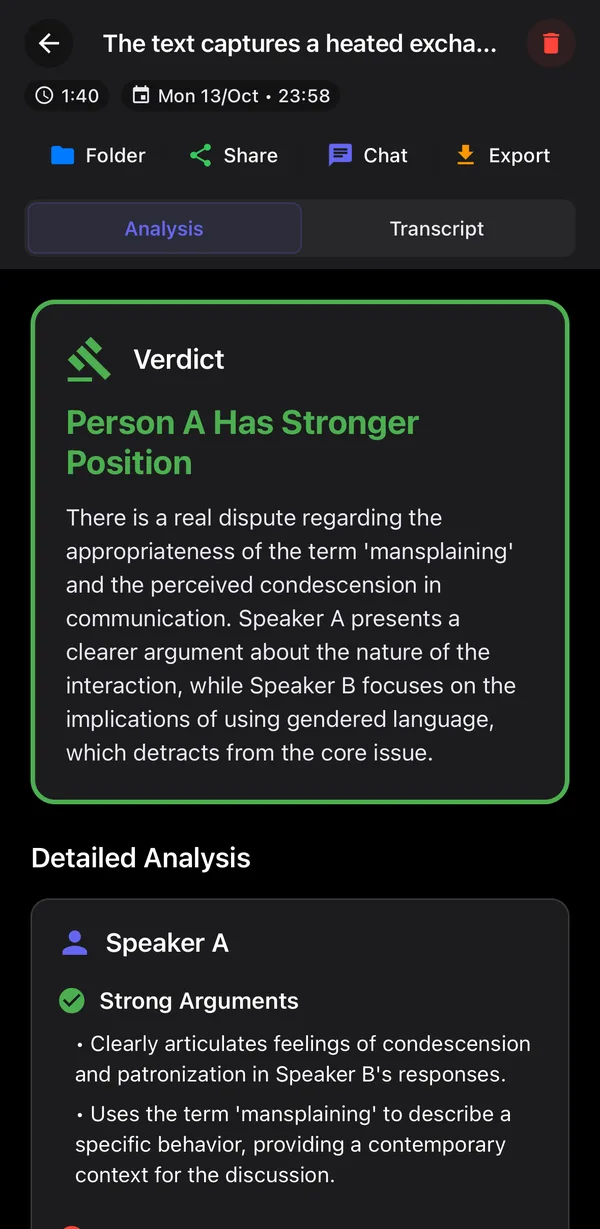
In an argument right now?
Type both sides and get a fair verdict, with the fallacies on each side. Free.
Questions people ask
What is the sunk cost fallacy in simple terms?
It is continuing something because of what you already spent on it, rather than because the future looks worth it. The spent time or money is gone whichever way you decide.
Is staying in a relationship because of time invested the sunk cost fallacy?
Only if the past years are the sole reason. Shared history can also be real information and ongoing value, so weighing it is reasonable. The fallacy is staying purely to avoid having "wasted" the time.
Why is it called the Concorde fallacy?
The Anglo-French Concorde jet kept receiving investment long after its commercial prospects looked poor, which made it a famous example of continuing because of money already spent.
How do you avoid the sunk cost fallacy?
Ask which option is best from today forward, as if you were starting fresh with the same choices. Treat past effort as information, not as a debt you must keep paying.
Sources
Keep reading
- FallaciesFalse DilemmaA false dilemma, also called a false dichotomy or either/or fallacy, presents only two options when more exist, so you feel forced to pick one: 'Either you trust me or you check my phone.' Real choices usually include middle paths, combinations or a third option nobody has mentioned yet. The fallacy works by hiding them.
- FallaciesAppeal to Emotion FallacyAn appeal to emotion is a fallacy when feelings are used in place of reasons: guilt, fear, pity or flattery pushes someone to agree instead of evidence that the claim is right. 'After everything I've done for you, you'd really say no?' Feelings matter in personal arguments. The fallacy is treating a feeling as proof about facts or fairness.
- FallaciesMiddle Ground FallacyThe middle ground fallacy is assuming the truth, or the best solution, must lie halfway between two opposing positions. If one person says the bill is due on the 5th and the other says the 15th, the answer is not the 10th. Splitting the difference works for preferences, not for facts.
- GuidesHow to Stop ArguingTo stop arguing, pause when either of you is too upset to think, take a break of at least 20 minutes with a set time to come back, then restart gently on one issue. Understand the other person's side before persuading. If it's the same fight on repeat, talk about why it matters to each of you.
- GuidesConflict Resolution StrategiesConflict resolution strategies are structured ways to settle a disagreement so both sides can live with the result. The most reliable ones separate the people from the problem, focus on each side's underlying interests rather than fixed demands, generate several options before choosing, and use fair, objective criteria to decide.
The ArgueResolver app · iPhone and Android
Record the argument. Get the verdict.
ArgueResolver listens while you talk it out, works out who said what, and gives an honest verdict on what was actually said, with compromises and steps to fix it.
Free to start · See how it works