Loaded Question Fallacy: Examples and How to Answer One
Also called: loaded question, complex question, fallacy of many questions, plurium interrogationum
Updated · 5 min read · 2 sources
The short answer
A loaded question fallacy is a question that smuggles in an assumption the other person has not agreed to, so any direct yes or no answer seems to admit it. "Why do you always embarrass me in front of my friends?" assumes you always do. The fair move is to answer the assumption first.
What is a loaded question fallacy?
A loaded question is a question built on a disputed assumption. It is also called a complex question, because it bundles two things into one: a claim and a question about that claim. Answering the question as asked means accepting the claim. The textbook version asks whether someone has stopped a bad habit: "yes" admits you had the habit, and "no" admits you still do.
The fallacy is in the structure, not the topic. Almost any question can be loaded if it presupposes something that is actually in dispute. "When are you going to start pulling your weight?" assumes you are not. "What's so important on your phone that you can't look at me?" assumes something on the phone is more important than the person asking.
Loaded question examples from real arguments
In personal conflicts, loaded questions are usually accusations dressed as curiosity. They feel safer to say than a direct accusation, because technically you only asked. But the other person hears the accusation, and now they have to fight the frame before they can answer anything. A few common ones:
- "Why do you always have to make everything about you?"
- "Who were you texting that you had to hide your phone?"
- "Are you going to apologize, or keep pretending you did nothing wrong?"
- "How long are you going to keep ignoring the budget we agreed on?"
- "Why don't you care about this family?"
Loaded Question Fallacy examples
Why loaded questions derail arguments
A loaded question forces a bad choice. Accept the assumption and you have conceded the main point without discussing it. Reject the assumption and you look evasive, because you "didn't answer the question." Either way, the real disagreement (did you hide your phone? are you ignoring the budget?) never gets examined on its own.
They also invite defensiveness, which is one of the most common ways arguments escalate. When people feel cornered by the framing, they defend themselves instead of listening, and the person who asked feels dismissed. Loaded questions often work hand in hand with the false dilemma, offering two answers that both admit the accusation.
What is not a loaded question
Every question carries some assumptions, and most are harmless. "What time did you get home?" assumes you came home, which nobody disputes. A question is only loaded when its built-in assumption is the very thing being argued about, or is unfair and unproven.
Questions based on something both people already know are not loaded either. If your partner saw you put the phone face down when they walked in, "why did you turn your phone over?" is a fair question about an observed fact. It does not assume a reason. "What are you hiding?" does.
How to answer a loaded question
Split it in two. Address the assumption first, calmly and specifically, then answer what is left. "I don't think I hid my phone. I put it down out of habit. Do you want to see who I was texting?" This keeps you honest and responsive without accepting a frame you disagree with. Avoid the opposite trap of refusing to engage: if there is a real concern underneath, the question deserves an answer once the assumption is set aside.
If you notice you are the one asking loaded questions, try turning them into a statement about yourself. Instead of "why don't you care about this family?" say "I felt alone handling the kids this weekend." I statements carry the same concern without the trap, and they are much harder to argue with.
What to say
I don't agree with the first part of that. Can we talk about whether it's true before I answer the rest?
I can tell something's bothering you. Can you tell me what you saw or felt, and I'll answer honestly?
Neither of those fits. Here's what actually happened from my side.
That came out as an accusation. What I mean is that I felt hurt when it happened.
In an argument right now?
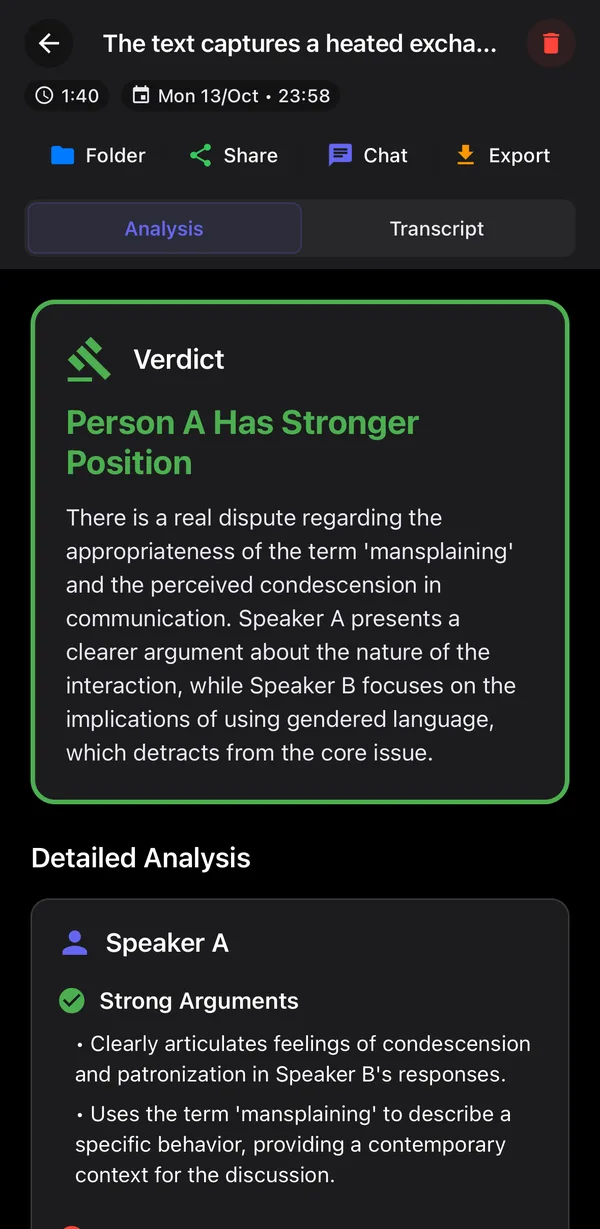
Type both sides and get a fair verdict, with the fallacies on each side. Free.
Questions people ask
What is a loaded question in simple terms?
It is a question with a hidden accusation or assumption built in, so answering it directly means agreeing to that assumption. It is also called a complex question.
What is a classic loaded question example?
The classic example asks whether someone has stopped a bad habit. Answering yes or no both admit the habit existed. In everyday arguments, "Why do you always ruin dinner?" works the same way.
How do you respond to a loaded question?
Answer the assumption first, then the question. Say what you disagree with, give your honest account and, if there is a real concern underneath, address it directly.
Is a loaded question the same as a leading question?
They are related but not the same. A leading question nudges toward a preferred answer; a loaded question goes further and presupposes a disputed claim, so any direct answer accepts it.
Sources
Keep reading
- FallaciesFalse DilemmaA false dilemma, also called a false dichotomy or either/or fallacy, presents only two options when more exist, so you feel forced to pick one: 'Either you trust me or you check my phone.' Real choices usually include middle paths, combinations or a third option nobody has mentioned yet. The fallacy works by hiding them.
- FallaciesCircular Reasoning and Begging the QuestionCircular reasoning is an argument whose conclusion is already assumed in its premises, so it ends where it started: 'It was a harmless joke because it didn't hurt anyone.' It's also called begging the question. The argument sounds complete but gives no independent reason to believe the conclusion. In everyday speech, 'begs the question' usually means something else: 'raises the question'.
- FallaciesPoisoning the WellPoisoning the well is discrediting someone in advance, before they have made their point, so the audience dismisses whatever they say next. "Before Dad tells his side, remember he exaggerates everything" is a classic example. It is a preemptive form of ad hominem: the attack comes first, so the argument never gets a fair hearing.
- GuidesDefensiveness in RelationshipsDefensiveness in relationships means protecting yourself from a complaint with excuses, counter-complaints or wounded innocence instead of hearing it. It is one of John Gottman's Four Horsemen, and nearly everyone does it. The antidote is to accept responsibility for at least part of the problem, which lets the conversation move forward.
- GuidesI StatementsI statements are sentences that describe your own feelings and needs instead of judging the other person, for example 'I feel overwhelmed when the dishes pile up, and I need a hand tonight' instead of 'You never help.' They raise a problem without putting the listener on trial, so it can be solved.
The ArgueResolver app · iPhone and Android
Record the argument. Get the verdict.
ArgueResolver listens while you talk it out, works out who said what, and gives an honest verdict on what was actually said, with compromises and steps to fix it.
Free to start · See how it works