Genetic Fallacy: Judging an Idea by Where It Came From
Also called: fallacy of origins, fallacy of virtue
Updated · 4 min read · 3 sources
The short answer
The genetic fallacy is accepting or rejecting a claim because of where it came from rather than because of whether it holds up. "You only think that because your mom told you" dismisses an idea by its origin. Where an idea started can be interesting, but it does not decide whether the idea is right.
What is the genetic fallacy?
The genetic fallacy is a fallacy of irrelevance: it judges a claim by its source or history instead of its content. "Genetic" here has nothing to do with DNA; it refers to the genesis, the origin, of an idea. The reasoning goes: this idea came from a bad (or good) place, so the idea itself must be bad (or good).
It works in both directions. You can dismiss a point because of its origin ("that's just something you read online") or accept one for the same reason ("Grandpa always said it, so it's true"). Either way, the actual question, is the claim true or the suggestion sensible, gets skipped.
Genetic fallacy examples from everyday arguments
In personal arguments, the genetic fallacy usually shows up as a way to wave away the other person's view without engaging with it. It is especially common in families and couples, where everyone knows where everyone's ideas come from. A few familiar versions:
- "You only want to split chores 50/50 because your therapist put that in your head."
- "That's not your opinion, that's your dad talking."
- "You got that from TikTok, so I'm not even going to look at it."
- "Your ex used to say that, so it's probably manipulative."
- "Of course you think the oldest should get the bigger room. You're the oldest."
Genetic Fallacy examples
Why origin doesn't settle the question
Good ideas come from strange places and bad ideas come from respected ones. A suggestion your partner picked up from a podcast might be exactly right for your situation; advice from a trusted relative might be outdated. Pointing to the source changes the subject from "is this right?" to "where did you hear it?", and the second question cannot answer the first.
The genetic fallacy is a close relative of ad hominem. Ad hominem attacks the person making the argument; the genetic fallacy attacks the idea's ancestry. Its positive mirror is the appeal to authority, where an idea is accepted mainly because of who said it.
When the source does matter
Source is not always irrelevant. When you cannot check a factual claim yourself, the reliability of the source is a fair reason to trust it more or less. A medical claim from a hospital's patient guide deserves more weight than the same claim in an anonymous comment. That is not the genetic fallacy; it is sensible weighing of evidence you cannot verify directly.
The fallacy begins when the source is treated as the final word: when someone refuses to look at the claim at all, or treats a trustworthy source as beyond question. Explaining how an idea came about can also be useful context, for example, "you might feel strongly about family dinners because your family never had them." It only becomes a fallacy if that explanation is used to declare the feeling wrong.
How to respond to the genetic fallacy
Bring the conversation back to the idea itself. Acknowledge the source if it is true ("yes, my therapist suggested it") and then ask the other person to judge the suggestion on its merits. People usually find it harder to dismiss an idea once it has been separated from whoever they associate it with.
If you catch yourself dismissing something because of where it came from, ask what you would think if a neutral friend had said it. That small test is a good guard against the fallacy, and against poisoning the well before the other person has even explained their view.
What to say
That's where I heard it, sure. But does the idea itself make sense to you or not?
I respect her a lot. I'd still like to look at whether it fits our situation.
I might have heard it from him first, but I've thought about it and it's my view now. Here's why.
I was reacting to where it came from. Let me actually listen to the suggestion.
In an argument right now?
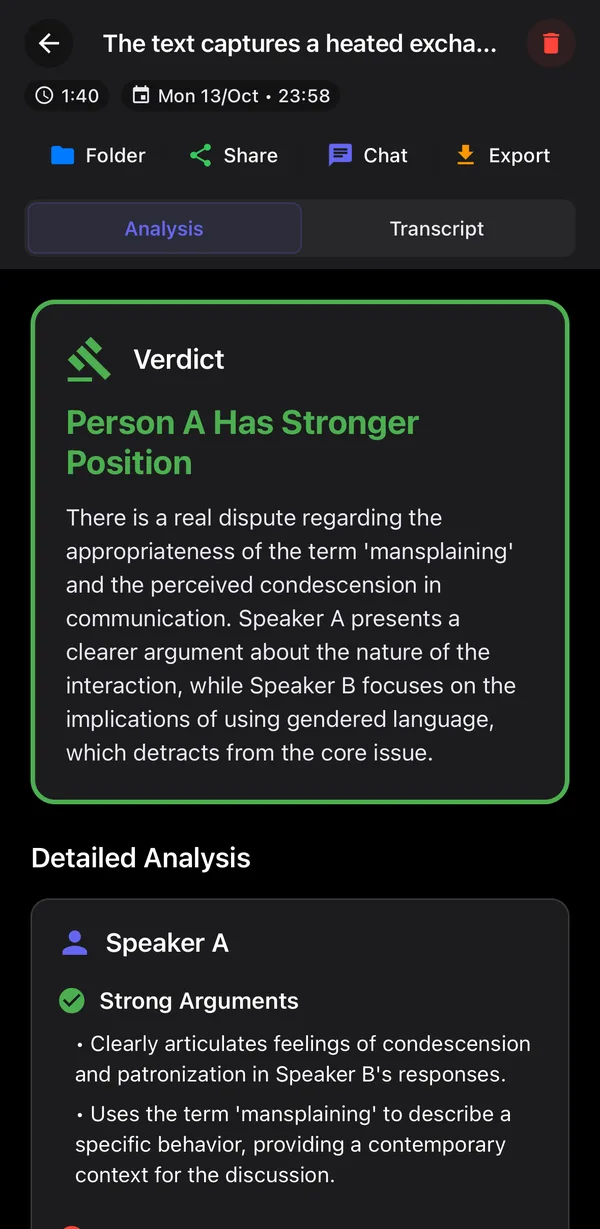
Type both sides and get a fair verdict, with the fallacies on each side. Free.
Questions people ask
What is the genetic fallacy in simple terms?
It is judging an idea as good or bad based on where it came from instead of on whether it is true or sensible.
What is an example of the genetic fallacy?
"You only believe that because you grew up in the city" used as if it proved the belief wrong. Where a belief came from does not show whether it is correct.
Is questioning a source the genetic fallacy?
No. Weighing how reliable a source is makes sense when you cannot check a claim yourself. It becomes a fallacy when the source is treated as the whole answer and the claim itself is never examined.
How is the genetic fallacy different from ad hominem?
Ad hominem attacks the person arguing; the genetic fallacy attacks the origin or history of the idea. They often appear together.
Sources
Keep reading
- FallaciesAd HominemAd hominem (Latin for 'to the person') is a fallacy in which someone attacks the person making an argument instead of the argument itself: their character, motives, intelligence or circumstances. The attack may sting, but it doesn't show the point is wrong. 'You're just jealous' and 'What would you know, you're nineteen' are classic ad hominem replies.
- FallaciesAppeal to Authority FallacyAn appeal to authority is a fallacy when a claim is treated as settled just because someone with status said it, especially when that person isn't an expert on the topic, is quoted out of context or disagrees with most experts. Citing real expertise on its own subject is a good reason. The fallacy is using a name in place of evidence.
- FallaciesPoisoning the WellPoisoning the well is discrediting someone in advance, before they have made their point, so the audience dismisses whatever they say next. "Before Dad tells his side, remember he exaggerates everything" is a classic example. It is a preemptive form of ad hominem: the attack comes first, so the argument never gets a fair hearing.
- FallaciesGuilt by Association FallacyThe guilt by association fallacy is concluding that a person or idea is bad because of who or what it is linked to, instead of on its own merits. "Your friend cheated, so you'd cheat too" judges you by your friend. Association can raise a question; it cannot answer it.
- GuidesArguments With ParentsArguments with parents are normal at every age. For teens they usually involve freedom and rules; for adult children, life choices, advice and boundaries. They go better when you pick a calm time, say clearly what you want (to be heard, advice, or permission), describe your feelings without blaming, and listen long enough to understand their worry.
The ArgueResolver app · iPhone and Android
Record the argument. Get the verdict.
ArgueResolver listens while you talk it out, works out who said what, and gives an honest verdict on what was actually said, with compromises and steps to fix it.
Free to start · See how it works