Burden of Proof Fallacy and the Appeal to Ignorance, Explained
Also called: shifting the burden of proof, appeal to ignorance, argument from ignorance, argumentum ad ignorantiam
Updated · 5 min read · 3 sources
The short answer
The burden of proof fallacy is making a claim and then demanding that others disprove it, instead of supporting it yourself. Its close cousin, the appeal to ignorance, treats a lack of evidence as proof: "you can't prove it didn't happen, so it did." The person making a claim usually carries the burden of backing it up.
What is the burden of proof?
In any disagreement, the burden of proof is the responsibility to support a claim. The usual rule is that it falls on whoever makes the claim, especially when the claim challenges what both people already accept. If you say the landlord agreed to waive the late fee, you are the one who should show the email, not your roommate who never saw it.
The burden of proof fallacy flips this around. Someone asserts something and then insists it stands until the other person proves it wrong: "Prove I'm not right." That is unfair because almost anything can be asserted, and disproving a claim often takes far more work than making it. A claim offered with no support can be set aside without support.
What is the appeal to ignorance?
The appeal to ignorance, also called the argument from ignorance, is the reasoning that usually comes with a shifted burden. It concludes that something is true because it has not been proven false, or false because it has not been proven true. The term is usually traced to the philosopher John Locke, writing in the late 1600s.
"Nobody has complained about my driving, so I'm a good driver" and "you can't prove you locked the door, so you didn't" are both appeals to ignorance. In each case the honest conclusion is narrower: we do not know yet. An unproven claim is undecided, not true and not false.
Burden of Proof Fallacy and the Appeal to Ignorance, Explained examples
How it shows up in personal arguments
In relationships, shifted burdens often attach to suspicion. "Prove you weren't flirting with her" asks someone to prove a negative about their own intentions, which is close to impossible. The feeling behind it may be real and worth talking about, but the demand sets up a test nobody can pass. If any answer is then treated as further evidence of guilt, the argument has become a kafka trap.
It also appears in practical disputes. "You can't show me the receipt, so you never paid him back." "There's no proof the dog chewed the shoe, so it must have been you." In family and roommate arguments, the person who speaks first and most confidently often ends up acting as if their version is the default, and everyone else has to dislodge it.
When a lack of evidence does count
Absence of evidence is not always meaningless. If you would expect to find evidence and a careful search finds none, that absence tells you something. If you check every shelf of the fridge and see no milk, it is reasonable to conclude you are out of milk. The fallacy is concluding from absence when nobody looked properly, or when evidence would not be expected either way.
Some settings also assign the burden deliberately. In criminal courts, the presumption of innocence means the prosecution must prove guilt, and a lack of proof leads to "not guilty." That is not a fallacy; it is an agreed rule about who has to prove what. Couples and housemates can make similar agreements, for example that whoever says a bill was paid shows the confirmation.
How to respond to a shifted burden of proof
Hand the burden back without making it a game. "You're the one saying it happened, so what makes you think so?" is fair and usually calmer than trying to disprove the claim. If you do have counter-evidence, offer it, but do not accept that your silence would make their claim true.
When suspicion is the real issue, move from proof to feelings and specifics. Ask what the person saw or experienced, and say what you are willing to share. That keeps the conversation honest without asking anyone to prove the impossible. If a story rests on one vivid incident, see the anecdotal fallacy; if the required evidence keeps changing, watch for moving the goalposts.
What to say
You're the one saying it happened. What makes you think so? I'm happy to look at it with you.
Not having proof either way means we don't know yet. What would help us find out?
I can't prove a negative, but I want you to feel okay. What did you notice that worried you?
That's fair, I said it, so it's on me to show it. Give me a minute to find the email.
In an argument right now?
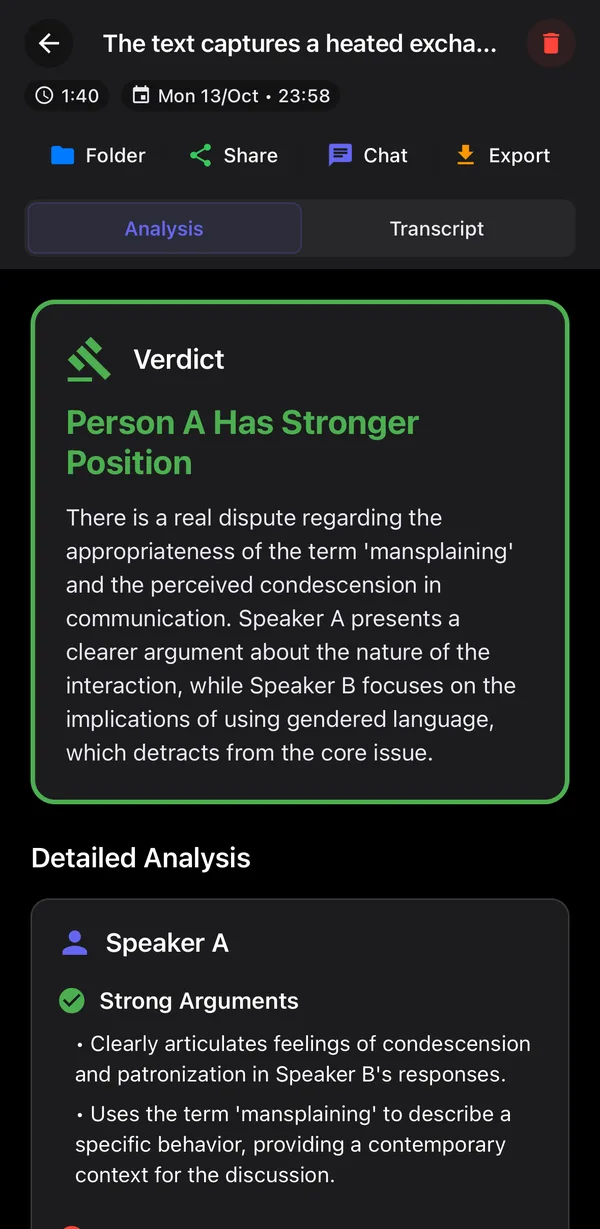
Type both sides and get a fair verdict, with the fallacies on each side. Free.
Questions people ask
What is the burden of proof fallacy?
It is making a claim and then insisting the other person must disprove it. Normally, whoever makes a claim is responsible for supporting it.
What is an example of the appeal to ignorance?
"No one has proven that my diet doesn't work, so it works." Or, in a relationship, "you can't prove you didn't forget on purpose, so you did." A lack of proof leaves the question open; it does not settle it.
Who has the burden of proof in an argument?
Usually the person making the claim, especially if it goes against what both people already accept. Some settings set the burden by rule, like the presumption of innocence in criminal trials.
Is absence of evidence ever evidence of absence?
Yes, when you would expect to find evidence and a careful search finds none. It becomes a fallacy when no proper search was done, or when evidence would not be expected either way.
Sources
Keep reading
- FallaciesAnecdotal FallacyThe anecdotal fallacy is using a personal story or an isolated example in place of solid evidence about a general claim. "My grandpa never wore a seatbelt and lived to ninety" says nothing about whether seatbelts save lives. Stories are vivid and memorable, which is exactly why they can outweigh better evidence in an argument.
- FallaciesKafka TrapA Kafka trap is an argument where denying an accusation is treated as evidence that the accusation is true. "If you weren't jealous, you wouldn't get so defensive about it" leaves no answer that counts as innocent. The trap is the structure, not the topic, and the label itself is sometimes misused to dodge fair criticism.
- FallaciesMoving the GoalpostsMoving the goalposts is changing what counts as proof, or as success, after the other person has already met the original standard. Instead of accepting the result, the person adds a new requirement, so the conclusion they started with can never be lost. It turns a disagreement into a game nobody else can win.
- FallaciesLoaded Question FallacyA loaded question fallacy is a question that smuggles in an assumption the other person has not agreed to, so any direct yes or no answer seems to admit it. "Why do you always embarrass me in front of my friends?" assumes you always do. The fair move is to answer the assumption first.
- GuidesI StatementsI statements are sentences that describe your own feelings and needs instead of judging the other person, for example 'I feel overwhelmed when the dishes pile up, and I need a hand tonight' instead of 'You never help.' They raise a problem without putting the listener on trial, so it can be solved.
The ArgueResolver app · iPhone and Android
Record the argument. Get the verdict.
ArgueResolver listens while you talk it out, works out who said what, and gives an honest verdict on what was actually said, with compromises and steps to fix it.
Free to start · See how it works