Does Cold Weather Make You Sick? Viruses Do, but Winter Helps Them
Updated · 5 min read · 6 sources
The short answer
Does cold weather make you sick? Not by itself. Colds and flu are caused by viruses, so cold air alone can't infect you. But winter helps those viruses: people crowd indoors, cold and dry air helps flu spread, and lab research suggests a chilled nose fights viruses less well. Both sides of this argument are partly right.
Does cold weather make you sick?
Does cold weather make you sick? Not directly. You need to pick up a virus to catch a cold or the flu, and no amount of chilly air creates one. A Cleveland Clinic family physician puts it plainly: you can't get a cold from cold weather itself, but cold weather environments can lead to one indirectly.
That is why this argument never quite ends. The person yelling "put a coat on, you'll catch a cold" has the cause wrong, and the person answering "germs make you sick, not cold" is right about the cause but misses why winter really is sick season.
Colds and flu come from viruses
The CDC says more than 200 viruses can cause colds, with rhinoviruses the most common. They spread mainly through droplets when an infected person coughs or sneezes, and sometimes through touching a contaminated surface and then your eyes, nose or mouth.
Colds are not strictly a winter thing either. The CDC notes that you can get a cold any time of year, and that adults in the US average two to three colds a year, with children often getting more. The flu is more seasonal: according to the CDC, flu season usually runs through fall and winter and most often peaks between December and February.
The verdict
- The CDC says more than 200 viruses cause colds, and they spread from person to person.
- You can catch a cold any time of year.
- Cleveland Clinic: you can't get a cold from cold weather itself.
- Flu season peaks in winter, most often between December and February.
- Lab research found a cooled nose releases about 42% fewer virus-fighting vesicles.
- Cold, dry conditions helped flu spread in an animal study.
What it sounds like
Why do people get sick more in winter?
Several things line up in cold months, and none of them requires the cold to infect you directly:
- More time indoors
- Cleveland Clinic points out that people spend more time inside in winter, in close quarters with others, which gives viruses more chances to spread.
- Dry air
- Cold weather can dry out the nose and throat, which may make it easier for viruses to get in, according to Cleveland Clinic.
- Better conditions for flu
- In a 2007 study using guinea pigs, flu spread more easily in cold, dry conditions. Infected animals kept at 5°C (41°F) shed the virus at peak levels about 40 hours longer than animals kept at 20°C (68°F).
What cold air does to your nose
The coat side gets some support from the lab. In a study published in the Journal of Allergy and Clinical Immunology, researchers had volunteers move from about 74°F to about 40°F, and the temperature inside their noses fell by several degrees Celsius. They then cooled human nasal cells and tissue in the lab by about 5°C (9°F) and found they released about 42% fewer of the tiny sacs, called extracellular vesicles, that help the nose fight off viruses.
A 2015 Yale study in mouse airway cells found that the common cold virus copies itself better at the cooler temperatures of the nose than at core body temperature, partly because the cells' antiviral defenses work less efficiently when cool.
Keep the limits in mind. These were lab and animal studies, not experiments that made people sick. They suggest a chilled nose may tilt the odds once a virus is around. They do not show that cold air alone gives you a cold.
What actually lowers your odds
If you want fewer sick days this winter, aim at the virus, not just the thermometer. Cleveland Clinic recommends:
- Washing your hands often.
- Covering coughs and sneezes, and staying home when you are sick.
- Getting your flu shot and other recommended vaccines.
- Eating well and staying hydrated.
- Bundling up and limiting time in extreme cold, which protects you from frostbite and other cold injuries even if it doesn't stop a virus.
- Seeing a doctor if a cold gets worse or doesn't go away.
The ruling
Viruses make you sick, so the germ side wins the core argument. Cold air by itself does not give you a cold or the flu. But the coat side is not entirely wrong: winter crowds people indoors, dry and cold air helps flu spread, and lab work suggests a cold nose has weaker defenses.
"I went out without a jacket and got sick the next day" is a classic post hoc argument, and the timing alone can't show what caused it. The same myth shows up in the fight about sleeping with wet hair. Wear the coat for comfort, wash your hands for your health, and if the debate is still going, hand it to the argument judge.
In an argument right now?
Type both sides and get a fair verdict, with the fallacies on each side. Free.
Questions people ask
Can you get sick from being cold?
Not by itself. Colds and flu are caused by viruses. Being chilled may make your nose's defenses weaker, according to lab research, but you still have to be exposed to a virus.
Why do people get sick more in the winter?
People spend more time indoors together, cold and dry air helps flu spread, and dry air can dry out the nose and throat. Flu season in the US most often peaks between December and February, according to the CDC.
Can going outside with wet hair give you a cold?
No. A cold needs a virus, and wet hair doesn't supply one, whatever the temperature outside. You may feel chilly and uncomfortable, but that is not an infection.
Can you catch a cold in summer?
Yes. The CDC says you can get a cold any time of year, since some cold viruses circulate in spring, summer and fall.
Sources
- CDC: About Common Cold
- CDC: Flu Season
- Cleveland Clinic Newsroom: Can Cold Weather Really Make You Sick?
- Huang et al., Cold exposure impairs extracellular vesicle swarm-mediated nasal antiviral immunity (J Allergy Clin Immunol)
- Foxman et al., Temperature-dependent innate defense against the common cold virus (PNAS, 2015)
- Lowen et al., Influenza virus transmission is dependent on relative humidity and temperature (PLoS Pathog, 2007)
Keep reading
- FallaciesPost Hoc Ergo Propter HocPost hoc ergo propter hoc (Latin for 'after this, therefore because of this') is the fallacy of assuming that because one thing happened after another, the first caused the second: 'Ever since your mom visited, you've been distant.' The timing may be a clue, but coincidence, a shared cause or something else entirely could explain it.
- FallaciesCorrelation vs CausationCorrelation vs causation is the difference between two things happening together and one thing actually making the other happen. A correlation means two things tend to rise or fall together. Causation means changing one would change the other. A correlation can come from a hidden third factor, from the arrow pointing the other way, or from plain coincidence.
- DebatesIs It Bad to Sleep With Wet Hair?Is it bad to sleep with wet hair? Not for catching a cold; colds come from viruses. But dermatologists say it isn't great for your hair or scalp: wet hair is more fragile and can break from pillow friction, and a damp scalp can encourage yeast and bacteria. An occasional wet night is fine; a nightly habit is worth changing.
- DebatesDoes Cracking Knuckles Cause Arthritis?Does cracking knuckles cause arthritis? No. Studies comparing habitual knuckle crackers with people who don't crack have found no difference in hand arthritis, and a doctor who cracked only his left hand for more than 60 years found no difference between his hands. The pop comes from gas in the joint fluid, not bones grinding.
- DebatesBest Temperature for SleepingThe best temperature for sleeping is cool. The Sleep Foundation puts the ideal at about 65°F (18.3°C), and Cleveland Clinic recommends 60 to 67°F for adults. Your core body temperature drops as you fall asleep, and a cool room helps it along. When partners disagree, keep the room cool and let the colder person add layers.
The ArgueResolver app · iPhone and Android
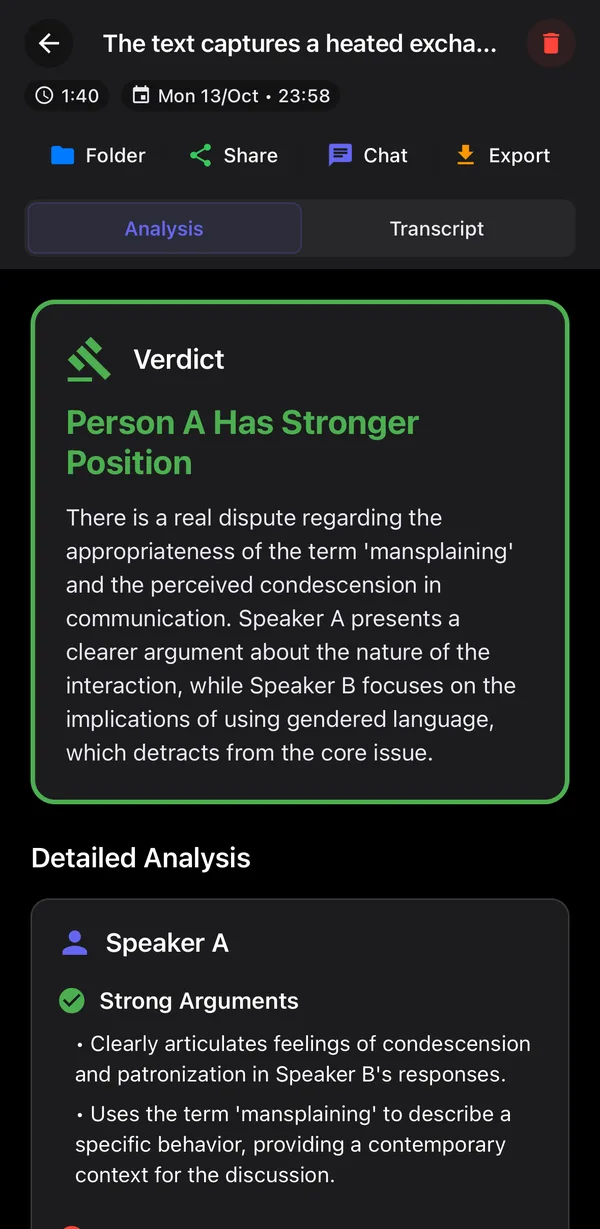
Record the argument. Get the verdict.
ArgueResolver listens while you talk it out, works out who said what, and gives an honest verdict on what was actually said, with compromises and steps to fix it.
Free to start · See how it works