Best Temperature for Sleeping: Settling the Thermostat War
Updated · 5 min read · 5 sources
The short answer
The best temperature for sleeping is cool. The Sleep Foundation puts the ideal at about 65°F (18.3°C), and Cleveland Clinic recommends 60 to 67°F for adults. Your core body temperature drops as you fall asleep, and a cool room helps it along. When partners disagree, keep the room cool and let the colder person add layers.
What is the best temperature for sleeping?
The best temperature for sleeping is cooler than most people keep their homes during the day. The Sleep Foundation says the best bedroom temperature is approximately 65°F, with an ideal range of about 65 to 68°F. A Cleveland Clinic sleep psychologist recommends 60 to 67°F and describes the ideal bedroom as a cool, dark, quiet cave.
The two ranges overlap in the mid 60s, which is a good number to bring to the argument. Cleveland Clinic also draws the outer lines: above 70°F is too hot, and below 60°F is too cold.
Why a cool room helps you sleep
Your body is supposed to cool down at night. The Sleep Foundation explains that core body temperature starts to drop about two hours before you fall asleep, alongside the release of melatonin, and that the body sheds heat partly through the hands and feet. A cool room makes that drop easier.
A room that is too warm works against it. The Sleep Foundation links a hot bedroom to restlessness and to less slow-wave and REM sleep, and the Cleveland Clinic expert calls heat a huge disruptor of REM sleep. Cold has its own costs, but Cleveland Clinic says its effect on sleep cycles is less dramatic than heat's.
The verdict
- The Sleep Foundation puts the ideal at about 65°F.
- Cleveland Clinic recommends 60 to 67°F and calls above 70°F too hot.
- A warm room is linked to restless sleep and less REM sleep.
- Some people genuinely sleep cold, especially as they age.
- Research suggests women are more often uncomfortable in cool rooms.
- Below 60°F is too cold, even by expert standards.
What it sounds like
Why partners feel the same room differently
If one of you is sweating and the other is reaching for a second blanket, neither of you is imagining it. Cleveland Clinic notes that some people "sleep hot" and others "sleep cold," and that body temperature tends to drop as people age.
Sex may play a part too. A 2012 review of thermal comfort research found that women were more likely than men to say they were uncomfortable in the same indoor conditions, especially when it was cool. The same review found that most studies saw no significant difference in the temperature men and women rated as neutral, so the gap is about sensitivity, not a different thermostat setting for every woman.
Hormones can flip the usual roles. The National Institute on Aging notes that hot flashes during the menopausal transition can happen at night as night sweats, which can make the warm-sleeping partner suddenly the one asking for a fan.
Fixes that work for both of you
The good news is that the cold partner can warm up a lot more easily than the hot partner can cool down. A few changes cover most couples:
- Set the room to the cool end. Somewhere in the 60 to 67°F range Cleveland Clinic suggests, then adjust by a degree or two at a time.
- Use two blankets. Separate covers let each person choose their own weight without a nightly tug of war.
- Layer the bedding. The National Institute on Aging suggests layered bedding that can be adjusted during the night, plus a fan, for people with night sweats.
- Put a fan on the warm side. Cleveland Clinic suggests keeping a fan in the room so you can cool off quickly.
- Try bed socks for cold feet. A small study of six young men sleeping in a cool room found that warming socks helped them fall asleep faster and sleep longer.
- Mind the evening. Cleveland Clinic suggests avoiding caffeine and high-sugar foods, and the Sleep Foundation suggests a warm bath an hour or two before bed to help your body cool down afterward.
When it is worth talking to a doctor
Most thermostat fights are about preferences, not health. But if you regularly wake up drenched in sweat, feel cold all the time no matter how you dress, or have hot flashes that keep breaking up your sleep, mention it to a doctor. The NIA notes that there are treatment options for hot flashes when lifestyle changes are not enough.
Babies are a separate case. Cleveland Clinic suggests 65 to 70°F for babies and toddlers, and the Sleep Foundation warns that a room that is too warm may raise the risk of SIDS, so follow your pediatrician's advice for infant sleep.
The ruling
The cool side wins on the number. Sleep experts agree that a bedroom in the mid 60s is better for sleep than a warm one, so the partner who wants the thermostat at 74°F is outvoted by the evidence. The cold partner still deserves comfort, and they get it from blankets, socks and layers instead of the thermostat.
Splitting the difference is not automatically fair, which is the middle ground fallacy. Here, though, a compromise around 65 to 67°F happens to be what the experts recommend. If the fight is really about who always gets their way, the fair fighting rules help more than any thermostat. Still deadlocked? Let the argument judge weigh both sides.
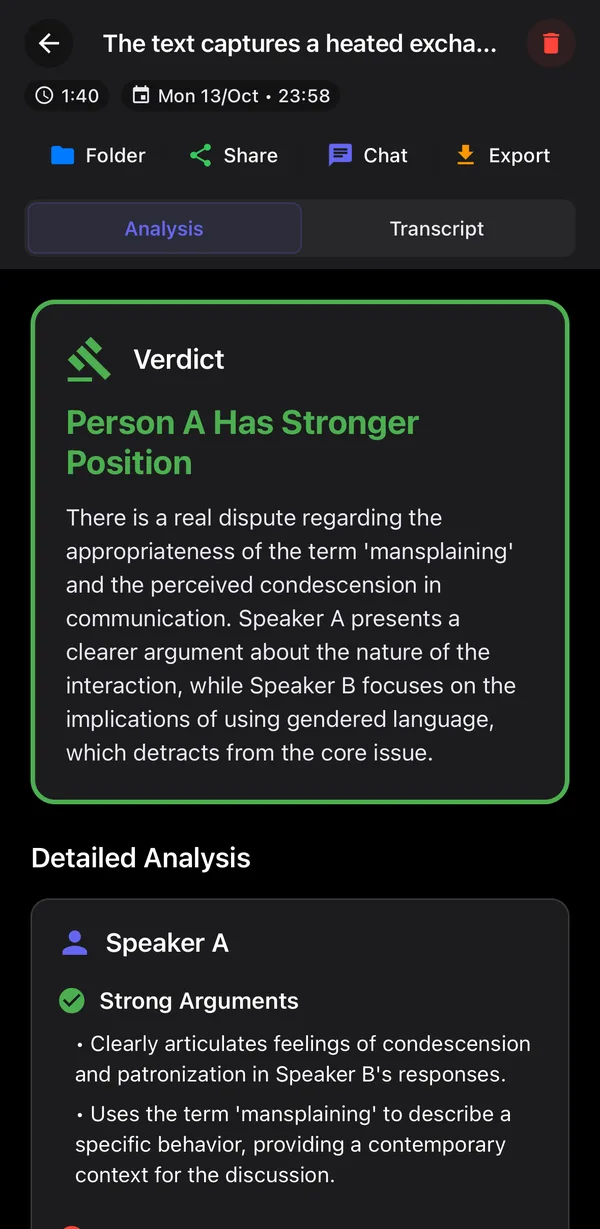
In an argument right now?
Type both sides and get a fair verdict, with the fallacies on each side. Free.
Questions people ask
Is 72 degrees too warm for sleeping?
For most adults, yes. Cleveland Clinic says a bedroom above 70°F is too hot, and both Cleveland Clinic and the Sleep Foundation recommend the 60s.
Is it better to sleep in a cold or warm room?
A cool room is better, but not a cold one. Cleveland Clinic says below 60°F is too cold, while heat above 70°F is a bigger disruptor of sleep.
Why is my partner always cold at night?
People differ: some sleep hot and some sleep cold, body temperature tends to drop with age, and research suggests women are more often uncomfortable in cool rooms. If it comes with other symptoms, it is worth asking a doctor.
Does wearing socks to bed help you sleep?
It may. A small study found that men sleeping in a cool room fell asleep faster and slept longer with warming bed socks, and the Sleep Foundation notes that chronically cold feet may make it harder to fall asleep.
What temperature should a baby's room be?
A little warmer than an adult's. Cleveland Clinic suggests 65 to 70°F for babies and toddlers; follow your pediatrician's guidance on sleepwear and blankets.
Sources
- Sleep Foundation: The Best Temperature for Sleep
- Cleveland Clinic: What's the Best Temperature for Sleep?
- Karjalainen, Thermal comfort and gender: a literature review (Indoor Air, 2012)
- National Institute on Aging: Hot Flashes: What Can I Do?
- Ko and Lee, Effects of feet warming using bed socks on sleep quality (J Physiol Anthropol, 2018)
Keep reading
- FallaciesMiddle Ground FallacyThe middle ground fallacy is assuming the truth, or the best solution, must lie halfway between two opposing positions. If one person says the bill is due on the 5th and the other says the 15th, the answer is not the 10th. Splitting the difference works for preferences, not for facts.
- GuidesFair Fighting RulesFair fighting rules are agreements two people make about how they will argue: one topic at a time, complaints about behavior instead of attacks on character, no contempt or name-calling, real listening before rebutting, and a time-out when either person is too upset to think. The goal is to solve the problem without wounding each other.
- GuidesWhat Do Couples Fight About?What do couples fight about? Most often chores, money, children, in-laws and extended family, time together, attention and phones, sex and affection, and plans. Research suggests the topic matters less than what sits underneath it: money fights, for example, are not the most frequent but tend to be the most recurring and least resolved.
- DebatesIs It Bad to Sleep With Wet Hair?Is it bad to sleep with wet hair? Not for catching a cold; colds come from viruses. But dermatologists say it isn't great for your hair or scalp: wet hair is more fragile and can break from pillow friction, and a damp scalp can encourage yeast and bacteria. An occasional wet night is fine; a nightly habit is worth changing.
- DebatesHow Often Should You Wash Your Sheets?How often should you wash your sheets? Once a week. Cleveland Clinic dermatologists advise washing them at least weekly, and the American Lung Association recommends weekly washing in hot water, at least 120°F, to control dust mites. Two weeks is the outside limit, and you should wash more often if you sweat heavily, have allergies or share the bed with pets.
The ArgueResolver app · iPhone and Android
Record the argument. Get the verdict.
ArgueResolver listens while you talk it out, works out who said what, and gives an honest verdict on what was actually said, with compromises and steps to fix it.
Free to start · See how it works