How Often Should You Wash Your Sheets? The Argument, Settled
Updated · 4 min read · 2 sources
The short answer
How often should you wash your sheets? Once a week. Cleveland Clinic dermatologists advise washing them at least weekly, and the American Lung Association recommends weekly washing in hot water, at least 120°F, to control dust mites. Two weeks is the outside limit, and you should wash more often if you sweat heavily, have allergies or share the bed with pets.
How often should you wash your sheets?
How often should you wash your sheets? Weekly is the answer from the medical side, and it is the answer that wins most bedroom arguments. A Cleveland Clinic dermatologist quoted in the clinic's guide says sheets should be washed at least once a week, and the American Lung Association gives the same weekly schedule for anyone trying to keep dust mites down.
In real households, the argument is rarely about microbiology. It is usually one person who grew up with weekly laundry and another who grew up with monthly laundry, both sure their way is normal, and one of them doing most of the washing.
What builds up in your sheets
A bed collects more than it looks like. Cleveland Clinic lists dead skin, sweat, body oils, dust mites, bacteria and allergens, and notes that the average person sheds about 1.5 grams of skin cells a day. Sweat and moisture help feed dust mites and bacteria, which is also why the clinic suggests letting the bed air out for a while before you make it.
None of this means a two week old sheet is dangerous for a healthy adult. It does mean the case for weekly washing is about real buildup, not about being fussy.
Pillowcases deserve the same schedule as the sheets, since your face, hair and skin products spend the whole night on them. If you only manage one thing between full washes, swapping the pillowcase is the easy win.
The verdict
- Cleveland Clinic dermatologists advise washing sheets at least weekly.
- The American Lung Association recommends weekly hot washes to control dust mites.
- Skin cells, sweat, oils and bacteria build up every night.
- Cleveland Clinic offers one to two weeks as a practical tip.
- Laundry costs time, water and energy.
- Many people grew up with less frequent washing and noticed no problems.
What it sounds like
Who should wash sheets more often
Weekly is the baseline. Cleveland Clinic suggests washing more often if any of these apply to you or to anyone sharing the bed:
- Asthma or allergies, especially to dust mites.
- Heavy sweating, or hot and humid weather.
- Pets that sleep in the bed.
- Recovering from an illness or an infection.
- Sleeping naked.
The case for every two weeks
The relaxed side has a point. The same Cleveland Clinic guide offers swapping sheets every one to two weeks as a practical tip, so two weeks is not outrageous for a healthy adult without allergies who showers before bed and sleeps alone. Laundry also costs time, water and energy, and those are fair considerations in a busy house.
What does not hold up is the argument from experience: "We changed the sheets once a month growing up and nobody got sick." That is an anecdotal fallacy. One family not noticing a problem does not tell you what the buildup is or what it does to people with allergies, and generalizing from one household is a hasty generalization.
Hot water and the rest of the bed
Temperature matters as much as frequency if dust mites are the concern. The American Lung Association recommends washing bedding in water of at least 120°F once a week to kill and wash away dust mites, and Cleveland Clinic also advises hot water. Check the care label first, since some fabrics do not tolerate hot washes.
The rest of the bed is on a slower clock. Cleveland Clinic puts pillows, blankets and comforters at roughly every few months to every six months, depending on the item and how you use it.
The ruling
Weekly wins. The person asking for clean sheets every week has dermatologists and the American Lung Association on their side, and two weeks is the outside limit for people without allergies, pets in the bed or heavy sweating.
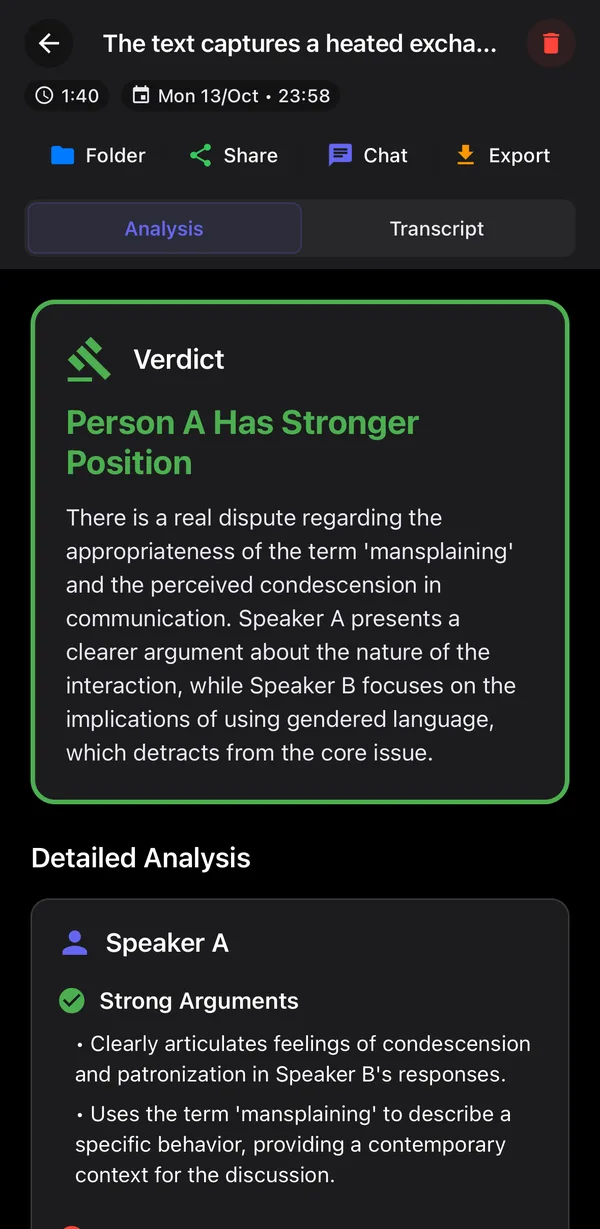
If the real fight is about who does the laundry, solve that instead: pick a sheet day and alternate who strips the bed. Our guide to what couples fight about has more on keeping chore arguments small. Still arguing? Paste both sides into the argument judge.
In an argument right now?
Type both sides and get a fair verdict, with the fallacies on each side. Free.
Questions people ask
Is washing sheets every two weeks gross?
Not for most healthy adults, and Cleveland Clinic mentions one to two weeks as a practical range. Weekly is still the recommendation, and two weeks is the outside limit.
What temperature should you wash sheets at?
Hot, if the fabric allows. The American Lung Association recommends at least 120°F once a week to kill and wash away dust mites.
How often should you wash a comforter?
Much less often than sheets. Cleveland Clinic suggests pillows, blankets and comforters every few months to every six months.
Do I need to wash sheets more often if my dog sleeps in the bed?
Yes. Sleeping with pets is one of the reasons Cleveland Clinic gives for washing more often than once a week.
Does showering before bed mean I can wash sheets less often?
It helps a little, since you bring less sweat and oil into bed, but you still shed skin and sweat overnight. Weekly is still the recommendation.
Sources
Keep reading
- DebatesHow to Load a Dishwasher, and Should You Rinse First?How to load a dishwasher: scrape food into the trash but do not rinse, put plates and pots on the bottom rack with the dirty side facing the center, put cups, glasses and plastics upside down on top, and load knives point down. ENERGY STAR says pre-rinsing only adds water and energy. Leave space so the spray reaches everything.
- DebatesToilet Seat Up or Down?Toilet seat up or down? The fairest rule for a shared bathroom is lid down for everyone: each person moves the seat the same amount and nobody drops into the bowl at night. An economist's model finds that leaving it as you used it costs the least total effort, but only a rule everyone agrees to actually ends the argument.
- FallaciesAnecdotal FallacyThe anecdotal fallacy is using a personal story or an isolated example in place of solid evidence about a general claim. "My grandpa never wore a seatbelt and lived to ninety" says nothing about whether seatbelts save lives. Stories are vivid and memorable, which is exactly why they can outweigh better evidence in an argument.
- FallaciesHasty GeneralizationA hasty generalization is a sweeping conclusion drawn from too few examples, or from examples that aren't typical: one unanswered text becomes 'you never answer me', one messy roommate becomes 'people from that school are slobs'. The examples may be real. There just aren't enough of them to support a claim about always, never or everyone.
- GuidesWhat Do Couples Fight About?What do couples fight about? Most often chores, money, children, in-laws and extended family, time together, attention and phones, sex and affection, and plans. Research suggests the topic matters less than what sits underneath it: money fights, for example, are not the most frequent but tend to be the most recurring and least resolved.
The ArgueResolver app · iPhone and Android
Record the argument. Get the verdict.
ArgueResolver listens while you talk it out, works out who said what, and gives an honest verdict on what was actually said, with compromises and steps to fix it.
Free to start · See how it works