Debate vs Argument vs Fight: What Each One Is For
Also called: argument vs fight, difference between debate and argument
Updated · 6 min read · 6 sources
The short answer
Debate vs argument is a difference in purpose and audience. A debate is a structured contest in which each side tries to persuade a judge or audience. An argument is two people trading reasons to settle something between them. A fight is what happens when the goal shifts from settling the question to winning, or to hurting the other person.
What is the difference between a debate and an argument?
The difference between a debate and an argument is who you are talking to and why. A debate is a formal exchange of opposing views, often with a moderator and an audience, and in competitive debate there are rules for how it is judged. The National Speech & Debate Association describes its debate events as students arguing both sides of a topic to persuade a judge that their side is stronger. Because debaters argue both sides, the job is not to say what they personally believe. It is to persuade someone else.
An argument, in everyday life, is between the people who will live with the outcome. The Internet Encyclopedia of Philosophy notes that "argument" can mean a dispute or a fight, or, more technically, reasons offered for a conclusion. The Stanford Encyclopedia of Philosophy describes argumentation as the activity of producing and exchanging reasons to support claims. A good personal argument is exactly that: two people exchanging reasons until they can settle something, like whose parents you visit, or whether the dog needs a second walk.
Debate vs argument vs fight at a glance
Three words people use interchangeably, with three different goals:
- Goal
- Debate: persuade the audience. Argument: settle the question. Fight: win, or make the other person feel bad.
- Audience
- Debate: a judge, a class, a group chat. Argument: the two of you. Fight: the two of you, often with an imagined audience of everyone who agrees with you.
- Rules
- Debate: formal ones, like time limits and speaking order. Argument: unspoken ones, or agreed fair fighting rules. Fight: anything goes.
- Conceding a point
- Debate: a tactical cost. Argument: progress. Fight: unthinkable.
- How it ends
- Debate: a decision or a vote. Argument: an agreement, a compromise, or agreeing to disagree. Fight: someone gives up or walks out, and the issue comes back.
What it sounds like
Argument vs fight: when the goal changes
The same topic can be an argument at 7 p.m. and a fight at 7:15. The difference is not volume. It is what each person is trying to do. In an argument you are still trying to solve the problem. In a fight you are trying to score, punish or protect your pride, and the original topic quietly disappears.
Philosophers have an old name for arguing to win rather than to find the truth: eristic. Relationship researchers have a more practical list. The Gottman Institute's Four Horsemen (criticism, contempt, defensiveness and stonewalling) describe the kinds of moves that turn an argument into a fight: attacking character instead of raising a complaint, mocking, making excuses, and shutting down. Signs you have crossed over include keeping score, dragging in old grievances, insults, and not remembering what the argument was originally about.
Why debate habits backfire at home
Debate skills are real skills: clear claims, evidence, catching weak reasoning. But a debate is a performance for a judge, and at home there is no judge. Rebuttals that would win a round, like pouncing on a contradiction or refusing to concede anything, tend to make your partner or roommate feel cross-examined. They answer by digging in.
In a personal argument, conceding a fair point is not losing. It is what lets the other person concede one back. Our guide on how to win an argument is built around that idea: winning means the problem gets solved and the other person still feels respected.
How to keep an argument from turning into a fight
A few habits keep the goal on settling things:
- Name the question. "So we're deciding whether we can afford the trip in March." It's hard to drift when you've said it out loud.
- One topic at a time. Old grievances get their own conversation.
- Complain about behavior, not character. "You didn't call" is solvable. "You're selfish" is not.
- Summarize their side before you answer it. It proves you're arguing with what they said.
- Take a break when you're too heated to be fair, and agree on when you'll come back.
- Agree on what would settle it. A text history, a budget, a fact you can check.
Is arguing bad for a relationship?
Arguing itself isn't the problem. Two people with different needs will disagree, and talking it through is how you get to a decision you can both live with. The trouble starts when arguments regularly turn into fights, or when one person avoids every argument and the issues pile up.
If you keep having the same argument and can't tell whose reasons are stronger, it can help to get an outside view. You can paste both sides into our free argument judge, which reads it the way a fair referee would: as an argument to settle, not a debate to score.
What to say
I think we stopped talking about the dog a while ago. Can we go back to that?
I'm not trying to score points. I'm trying to figure out what we're doing Saturday.
That's actually a fair point. Let me think about it.
I'm too wound up to be fair right now. Can we come back to this in twenty minutes?
What would it take for either of us to change our mind?
In an argument right now?
Type both sides and get a fair verdict, with the fallacies on each side. Free.
Questions people ask
What is the difference between a debate and an argument?
A debate is a structured contest where each side tries to persuade a judge or audience, sometimes arguing a side they did not choose. An argument is an exchange of reasons between people who need to settle something between themselves.
What is the difference between an argument and a fight?
In an argument, both people are still trying to settle the issue. In a fight, the goal has shifted to winning or hurting, which usually shows up as insults, old grievances and a forgotten original topic.
Is it healthy for couples to argue?
Disagreeing and talking it through is a normal part of any close relationship. What matters is how you argue: staying on the topic, avoiding contempt and personal attacks, and taking breaks when things get too heated.
Can a debate turn into an argument?
Yes. A friendly debate becomes an argument when the outcome starts to matter to the people involved, and it can become a fight if someone starts treating the disagreement as a personal attack.
Sources
Keep reading
- GuidesFair Fighting RulesFair fighting rules are agreements two people make about how they will argue: one topic at a time, complaints about behavior instead of attacks on character, no contempt or name-calling, real listening before rebutting, and a time-out when either person is too upset to think. The goal is to solve the problem without wounding each other.
- GuidesHow to Win an Argument HonestlyTo win an argument honestly, make sure you're actually right, state your claim precisely, agree on what evidence would settle it, represent the other side at its strongest, concede what's true in their view, and avoid fallacies. In personal arguments, winning means the problem gets solved and the other person still feels respected.
- GuidesThe Gottman Four HorsemenThe Gottman Four Horsemen are four ways of fighting that John Gottman's research links to relationships falling apart: criticism, contempt, defensiveness and stonewalling. Each has an antidote: a gentle start-up, a culture of appreciation, taking responsibility, and a real break to calm down. How you fight matters more than whether you fight.
- GuidesHow to Stop ArguingTo stop arguing, pause when either of you is too upset to think, take a break of at least 20 minutes with a set time to come back, then restart gently on one issue. Understand the other person's side before persuading. If it's the same fight on repeat, talk about why it matters to each of you.
- DebatesIs a Hot Dog a Sandwich?Is a hot dog a sandwich? By a broad dictionary definition, yes: it is a filling served in split bread, and Merriam-Webster has said it counts. In everyday use, no: nobody orders one by asking for a sandwich, and the hot dog industry says it is its own thing. Our ruling: technically a sandwich, practically a hot dog.
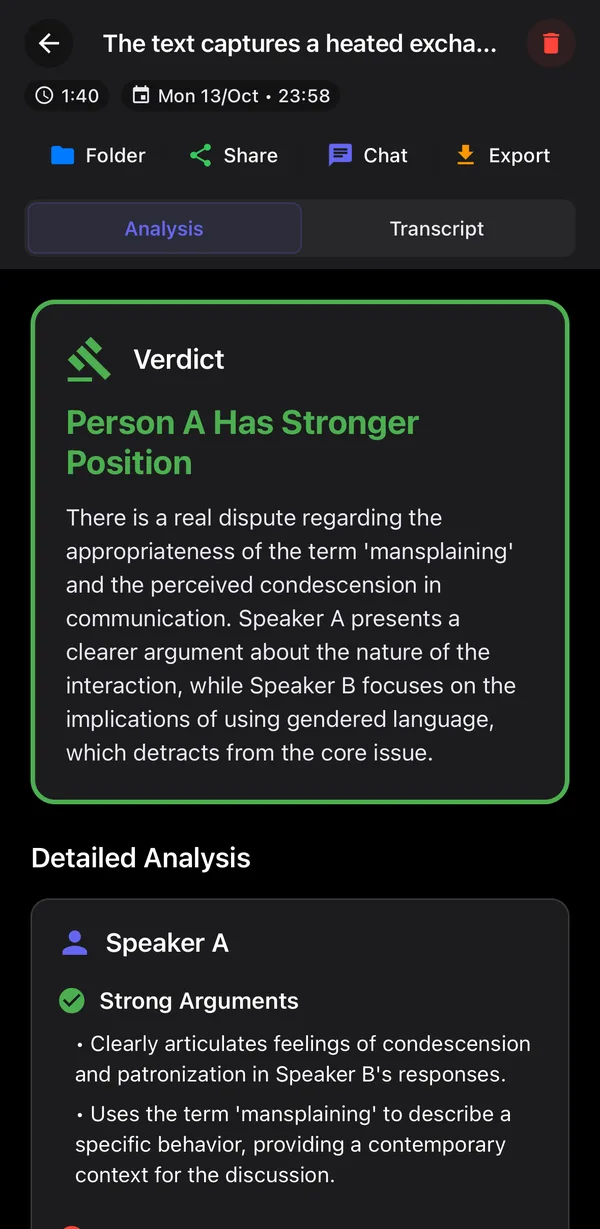
The ArgueResolver app · iPhone and Android
Record the argument. Get the verdict.
ArgueResolver listens while you talk it out, works out who said what, and gives an honest verdict on what was actually said, with compromises and steps to fix it.
Free to start · See how it works