Shower in the Morning or at Night? What the Research Says
Updated · 5 min read · 4 sources
The short answer
Should you shower in the morning or at night? It depends on your goal. To fall asleep faster, a warm shower or bath one to two hours before bed has the best evidence. To wake up, style your hair or start the day clean, mornings win. For your skin, timing matters less than keeping showers short and warm.
Shower in the morning or at night?
Shower in the morning or at night is a surprisingly personal question, and in a home with one bathroom it is also a scheduling problem. Morning people swear a shower is what wakes them up. Night people cannot imagine getting into clean sheets with the whole day still on their skin.
Neither camp is wrong. Cleveland Clinic dermatologist Alok Vij says there is no single right time for everyone, only a right time for each person, and the evidence explains why: morning and night showers are good at different things.
The case for showering at night
Night showers have the strongest research behind them, and it is about sleep. In 2019, biomedical engineers at the University of Texas at Austin published a systematic review and meta-analysis in Sleep Medicine Reviews after screening 5,322 studies on warm baths and showers before bed. They found that water of about 104 to 109 degrees Fahrenheit improved overall sleep quality, and that bathing one to two hours before bedtime helped people fall asleep an average of 10 minutes faster.
The reason is body temperature. Your core temperature naturally drops in the hour or so before your usual bedtime, and warm water pushes blood out to your hands and feet, where heat escapes, which helps that drop along. The timing matters: the researchers put the sweet spot at about 90 minutes before bed.
Night showers also wash off the day's dirt, pollutants and sunscreen before you get into bed, Cleveland Clinic notes, and for some people the ritual itself becomes a cue to wind down.
The verdict
- A warm shower one to two hours before bed helps you fall asleep faster.
- It washes off the day's dirt, pollutants and sunscreen.
- It frees up the bathroom for the morning rush.
- Warm water helps you feel awake.
- It clears overnight sweat and resets bed hair.
- It preps your skin for sunscreen and skin care.
What it sounds like
The case for showering in the morning
Morning showers win on getting going. Cleveland Clinic lists the benefits: warm water can help you feel awake, washing removes the sweat, skin cells and bacteria you pick up from your bed overnight, and hair that a pillow has flattened is easier to style after a wash. A morning face wash also preps your skin for sunscreen and skin care.
Mornings also suit anyone who sweats at night or works out early. And a night shower followed by bed with wet hair raises a separate household argument, covered in is it bad to sleep with wet hair.
What dermatologists say about your skin
For skin, the clock matters less than the method. The American Academy of Dermatology advises limiting showers and baths to 5 to 10 minutes in warm, not hot, water, closing the bathroom door to keep the steam in, using a gentle fragrance-free cleanser, and putting on moisturizer right after you dry off, while your skin is still damp.
Cleveland Clinic says the same for eczema and sensitive skin: shower timing is not the key, gentle products and regular moisturizing are. And showering at night does not meaningfully keep your sheets cleaner. You still need to wash them regularly, which has its own debate.
The shared bathroom problem
For couples and roommates, morning versus night is often less about health than about the 7 a.m. traffic jam. Two morning showerers with one bathroom means a race for hot water, a fogged mirror and someone running late. One night person and one morning person, on the other hand, never queue.
If you are fighting about it, trade needs, not accusations. Each person says what the shower is for (waking up, hair, sleep, the gym) and what time they have to leave. Often the person with the more flexible goal moves to evenings, the earlier leaver gets the first slot, and whoever goes first keeps it short so the hot water lasts.
Small, repeated friction like this turns into bigger fights when nobody names it. Our fair fighting rules help keep the talk about the schedule, not about who is selfish.
The ruling
Shower in the morning or at night based on what you want from it. If you struggle to fall asleep, shower warm at night, about one to two hours before bed. If you need help waking up, have hair to style or sweat at night, shower in the morning. If your skin is dry, a short, warm shower and moisturizer afterward matter more than the time of day.
In a shared home, the tiebreaker is the clock: whoever leaves earlier gets the morning, and whoever sleeps worse gets the evening slot. Try the other routine for a week, as Dr. Vij suggests, before deciding you hate it. Still can't agree? Put both sides into the argument judge.
In an argument right now?
Type both sides and get a fair verdict, with the fallacies on each side. Free.
Questions people ask
Is it better to shower at night or in the morning?
Neither is better for everyone. Night showers have the best evidence for sleep, morning showers help you wake up and start clean, and for skin the length and temperature matter more than the time.
Does a warm shower before bed help you sleep?
A 2019 meta-analysis found that warm water of about 104 to 109 degrees Fahrenheit improved sleep quality, and that bathing one to two hours before bed shortened the time to fall asleep by about 10 minutes on average.
How long should a shower be?
The American Academy of Dermatology suggests 5 to 10 minutes in warm water, followed by moisturizer while your skin is still damp.
Does showering at night keep your sheets cleaner?
Not by much, according to Cleveland Clinic. Sheets collect sweat, skin cells and oils either way, so wash them regularly whichever time you shower.
Sources
- UT Austin Cockrell School of Engineering: Take a Warm Bath 1-2 Hours Before Bedtime to Get Better Sleep (2019)
- Haghayegh et al., Before-bedtime passive body heating by warm shower or bath to improve sleep, Sleep Medicine Reviews (2019)
- Cleveland Clinic: Evening vs. Morning Shower: Which Is Better?
- American Academy of Dermatology: Dermatologists' top tips for relieving dry skin
Keep reading
- DebatesHow Often Should You Wash Your Sheets?How often should you wash your sheets? Once a week. Cleveland Clinic dermatologists advise washing them at least weekly, and the American Lung Association recommends weekly washing in hot water, at least 120°F, to control dust mites. Two weeks is the outside limit, and you should wash more often if you sweat heavily, have allergies or share the bed with pets.
- DebatesIs It Bad to Sleep With Wet Hair?Is it bad to sleep with wet hair? Not for catching a cold; colds come from viruses. But dermatologists say it isn't great for your hair or scalp: wet hair is more fragile and can break from pillow friction, and a damp scalp can encourage yeast and bacteria. An occasional wet night is fine; a nightly habit is worth changing.
- DebatesBest Temperature for SleepingThe best temperature for sleeping is cool. The Sleep Foundation puts the ideal at about 65°F (18.3°C), and Cleveland Clinic recommends 60 to 67°F for adults. Your core body temperature drops as you fall asleep, and a cool room helps it along. When partners disagree, keep the room cool and let the colder person add layers.
- GuidesFair Fighting RulesFair fighting rules are agreements two people make about how they will argue: one topic at a time, complaints about behavior instead of attacks on character, no contempt or name-calling, real listening before rebutting, and a time-out when either person is too upset to think. The goal is to solve the problem without wounding each other.
- GuidesWhat Do Couples Fight About?What do couples fight about? Most often chores, money, children, in-laws and extended family, time together, attention and phones, sex and affection, and plans. Research suggests the topic matters less than what sits underneath it: money fights, for example, are not the most frequent but tend to be the most recurring and least resolved.
The ArgueResolver app · iPhone and Android
Record the argument. Get the verdict.
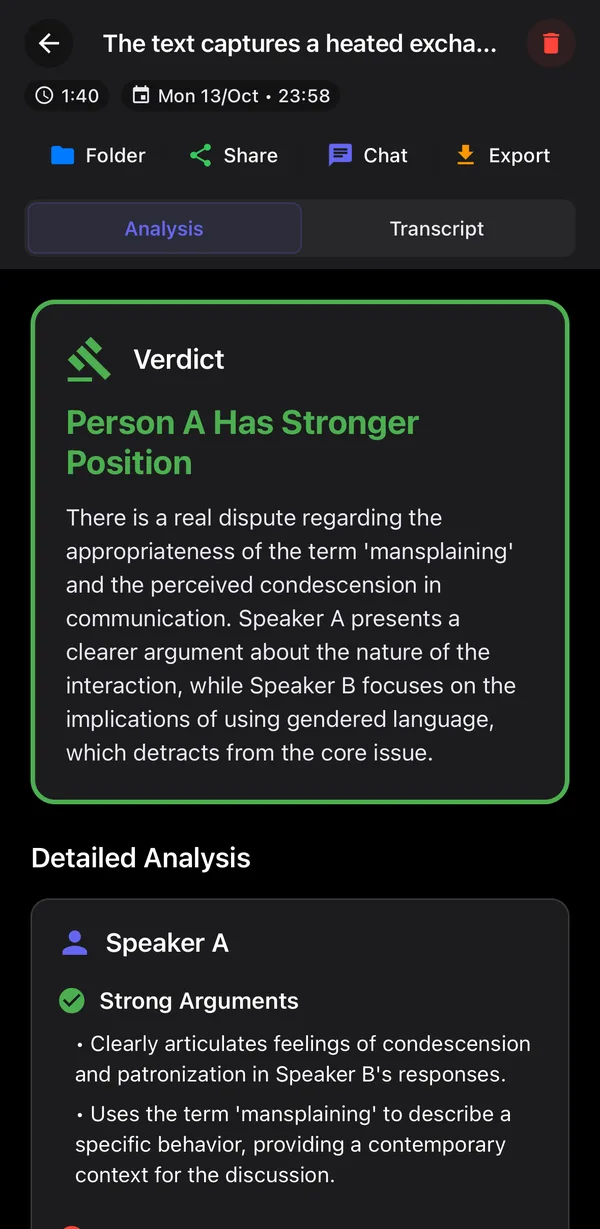
ArgueResolver listens while you talk it out, works out who said what, and gives an honest verdict on what was actually said, with compromises and steps to fix it.
Free to start · See how it works