Pineapple on Pizza: Does It Belong? The Argument, Settled
Updated · 6 min read · 3 sources
The short answer
Does pineapple on pizza belong? It is a question of taste, not fact, so nobody can be proven wrong. Hawaiian pizza is credited to a restaurant owner in Ontario, Canada, in 1962, and American pizza eaters are split on it. Our ruling: pineapple belongs on the pizza of anyone who likes it, and on nobody else's slice.
Does pineapple belong on pizza?
Pineapple on pizza is the rare food fight where there is no fact to find. Whether a tomato is a fruit or whether ketchup needs the fridge can be checked against a definition or a food-safety source. Whether pineapple tastes good on pizza can only be checked against your own mouth, and your mouth is not on trial.
That matters, because most of the heat in this argument comes from treating a preference like a fact. "Pineapple on pizza is wrong" sounds like a claim about the world, but it is really "I don't like it" said loudly. Telling the two apart is the whole lesson of fact vs. opinion, and it is a great way to cool this one down.
Where Hawaiian pizza came from
Hawaiian pizza did not come from Hawaii. It is credited to Sam Panopoulos, a Greek immigrant who moved to Canada in 1954. He told many interviewers that he made the first one in 1962 at the Satellite Restaurant in Chatham, Ontario, after wondering whether canned pineapple would make a good topping. Some people have disputed his claim, but his is the story most often told.
According to the usual account, he was drawing on the sweet and sour flavors of the Canadian Chinese dishes he also cooked, and the name came from the brand of canned pineapple he used rather than from any trip to the islands. Panopoulos died in 2017 at age 83. That same year, Iceland's president joked to a group of students that he would ban pineapple on pizza if he could, later clarifying that he was kidding, and Canada's prime minister answered with a tweet defending what he called a delicious southwestern Ontario creation.
The verdict
- Sweet pineapple and salty ham are a classic flavor pairing.
- Pineapple's tartness cuts through rich cheese.
- Plenty of people order it on purpose, and enjoyment is the point of pizza.
- Some people do not want sweet fruit in a savory dish.
- Warm pineapple can be wet and soft, which some find makes the slice soggy.
- It is a 1960s Canadian invention, not part of Italian pizza tradition.
What it sounds like
The case for pineapple: sweet, salty and sour
The pro side has the cook's logic on its side. A classic Hawaiian pizza pairs pineapple with ham, and salty pork with sweet fruit is an old combination: think of a ham glazed with fruit, or the sweet and sour dishes that inspired Panopoulos. Pineapple brings sweetness and a sharp, tart edge, which cuts through rich cheese the way a squeeze of lemon cuts through something fried.
There is also contrast in texture and temperature: juicy fruit against chewy crust and melted cheese. People who love it are not confused about what pizza is. They like a bite that goes salty, sweet and sour at once, and that is a perfectly respectable thing to like.
- Salty ham plus sweet fruit is a long-standing pairing in many cuisines.
- Pineapple's tartness balances heavy cheese.
- Plenty of people order it on purpose, again and again.
The case against: why so many people hate it
The anti side has real reasons too. Some people simply do not want sweet food in a savory dish, and pizza is savory to them. Others object to texture: warm fruit can be wet and soft, and some find it makes the slice soggy. And some care about tradition, since Hawaiian pizza is a Canadian invention, not part of the Italian pizza tradition.
The numbers show a real split. In a 2019 YouGov survey of Americans who eat pizza, 12 percent named pineapple one of their three favorite toppings and 24 percent named it one of their three least favorite. For perspective, anchovies did worse, with 49 percent putting them among their least favorites, and pepperoni was the clear favorite at 53 percent.
Why polls don't settle it
It is tempting to wave a poll around: "See, more people hate it." But a poll tells you how many people share a taste, not whose taste is correct. Arguing that something is good or bad because most people say so is the bandwagon fallacy, and it backfires here: if popularity decided taste, anchovies would lose even harder than pineapple, and the people who love them would still love them.
What a poll is good for is planning. If one person in four at your party would rather skip pineapple, you now know not to order only Hawaiian. That is a useful fact about the group, not a verdict on the topping.
How to order pizza for a group fairly
Since nobody is wrong, the real question is how to share. These rules keep the peace:
- Ask before you order, and count heads, not volume. The loudest opinion is still one vote.
- Go half and half. Pineapple on one side, something else on the other, and nobody picks fruit off their slice.
- Keep a no-pineapple pie in every big order, so the people who hate it always have something to eat.
- Rotate picks for regular pizza nights, so the same person isn't vetoed every week.
- Skip the commentary. Someone who orders pineapple is not attacking pizza, and someone who hates it is not a snob.
The ruling
Pineapple belongs on pizza for the people who like it. There is no fact that settles this, so the pro side cannot prove it is delicious and the anti side cannot prove it is wrong. What both sides can do is order fairly: half and half, or one pie each, and no lectures across the table.
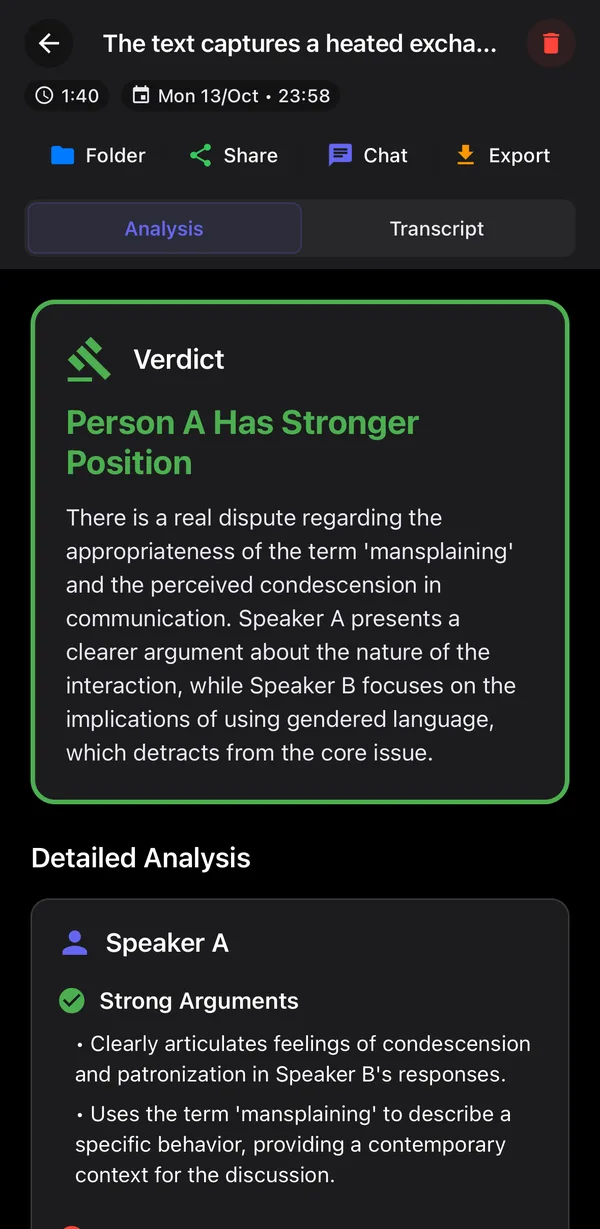
If your group chat has turned a topping into a referendum on someone's character, that argument is about something else. Paste both sides into the argument judge and see who is actually being unreasonable.
In an argument right now?
Type both sides and get a fair verdict, with the fallacies on each side. Free.
Questions people ask
Who invented pineapple on pizza?
Hawaiian pizza is credited to Sam Panopoulos, who said he first made it in 1962 at the Satellite Restaurant in Chatham, Ontario, Canada. Some have disputed the claim, but his account is the standard one.
Why is it called Hawaiian pizza if it is from Canada?
According to the usual account, the name came from the brand of canned pineapple Panopoulos used, not from Hawaii itself.
Do most Americans like pineapple on pizza?
Opinion is split. In a 2019 YouGov survey, 12 percent of American pizza eaters named pineapple a top-three favorite topping and 24 percent named it a top-three least favorite. Anchovies were far less popular.
Is pineapple on pizza wrong?
No. It is a matter of taste, so there is no wrong answer, only different preferences. The fair move is to order so that everyone has something they like.
Sources
Keep reading
- FallaciesFact vs OpinionFact vs opinion comes down to whether a claim can be checked. A factual statement can be proved or disproved with evidence, even if it turns out to be wrong. An opinion expresses a judgment, preference or value, so evidence can inform it but can't settle it. 'You were 40 minutes late' is factual; 'you're inconsiderate' is an opinion.
- FallaciesBandwagon FallacyThe bandwagon fallacy treats something as true, good or acceptable because many people believe it or do it: 'Everyone in my class has a phone.' Popularity can be a useful hint, but it isn't evidence that a claim is correct or that a choice is right for you. It's also called the appeal to popularity or argumentum ad populum.
- DebatesIs a Tomato a Fruit or a Vegetable?Is a tomato a fruit? Botanically, yes: it grows from the flower's ovary and carries the seeds, which makes it a berry. In the kitchen it is used as a vegetable, and the US Supreme Court treated it as one for tariff purposes in Nix v. Hedden (1893). Our ruling: both sides are right, each in its own field.
- DebatesIs a Hot Dog a Sandwich?Is a hot dog a sandwich? By a broad dictionary definition, yes: it is a filling served in split bread, and Merriam-Webster has said it counts. In everyday use, no: nobody orders one by asking for a sandwich, and the hot dog industry says it is its own thing. Our ruling: technically a sandwich, practically a hot dog.
- GuidesFair Fighting RulesFair fighting rules are agreements two people make about how they will argue: one topic at a time, complaints about behavior instead of attacks on character, no contempt or name-calling, real listening before rebutting, and a time-out when either person is too upset to think. The goal is to solve the problem without wounding each other.
The ArgueResolver app · iPhone and Android
Record the argument. Get the verdict.
ArgueResolver listens while you talk it out, works out who said what, and gives an honest verdict on what was actually said, with compromises and steps to fix it.
Free to start · See how it works