Cherry Picking Fallacy: Examples and How to See the Whole Picture
Also called: cherry picking, fallacy of incomplete evidence, suppressed evidence, selective evidence
Updated · 4 min read · 2 sources
The short answer
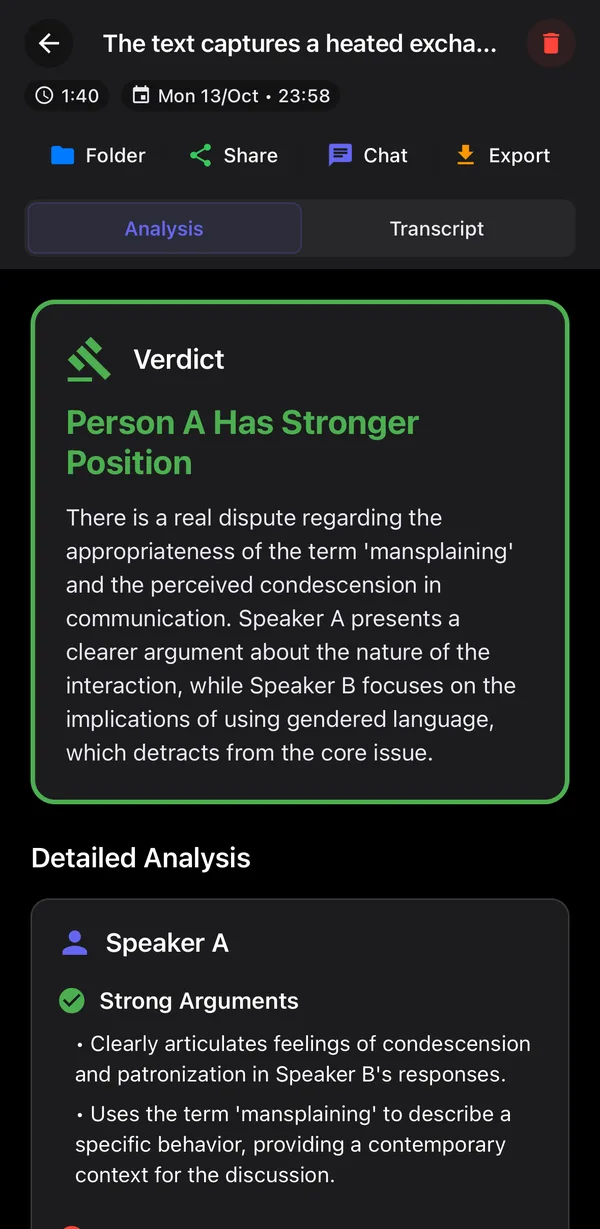
The cherry picking fallacy is selecting only the facts, examples or quotes that support your side while ignoring the ones that don't. Each picked item may be true, but the overall picture is false. Showing a friend three screenshots out of a two-hour text fight is a common everyday version.
What is cherry picking?
Cherry picking means choosing the most favorable pieces of evidence from everything available and presenting them as if they were the whole story. It is also called the fallacy of incomplete evidence or suppressed evidence. The name comes from the fruit: a picker who takes only the ripest cherries will give you a very wrong idea of what the rest of the tree looks like.
Cherry picking can be deliberate, but often it is not. People naturally remember the moments that fit their view. After a fight, the other person's harsh words replay in your head, while your own sharp reply fades. That makes cherry picking one of the most common reasoning errors in personal arguments, and one of the hardest to notice in yourself.
Cherry picking examples from everyday conflicts
It shows up wherever there is a long history to pick from, which is to say, every relationship. Some familiar forms:
- Screenshotting the three worst messages from a long text argument and leaving out what came before them.
- "You never help with the kids" based on the two evenings you remember, not the five you don't.
- Quoting one line from a review, article or study and skipping the paragraph that qualifies it.
- Listing every time a roommate was loud and none of the times they asked you to keep it down.
- Bringing up the one birthday your partner forgot, and never the nine they planned.
Cherry Picking Fallacy examples
Why cherry picking is so convincing
Every cherry-picked fact can be checked and found true, which makes the argument feel airtight. The problem is in what is missing, and missing evidence is invisible unless someone goes looking for it. The listener has no way of knowing that the screenshots skip the provocation, or that the quoted study ends with a big "however."
It also feeds on itself. Once you believe your partner is careless, careless moments stand out and careful ones blend into the background. Cherry picking can drive hasty generalizations and give an anecdote far more weight than it deserves. Delivered in bulk, it can become a Gish gallop.
What cherry picking is not
Using examples is not cherry picking. You cannot list every evening of a year; picking a few representative ones is normal. It becomes cherry picking when the examples are unrepresentative and the counterexamples are hidden. A fair speaker will say something like, "Most weeks we're fine, but these three Fridays really hurt," which gives the listener the context to weigh the examples.
Focusing on a specific incident is not cherry picking either. If the argument is about what happened at Saturday's party, Saturday's party is the relevant evidence. Cherry picking is about misrepresenting a pattern, not about discussing one event.
How to respond to cherry picking
Ask for the rest of the picture without calling anyone a liar. "Can we look at the whole conversation, not just those messages?" is reasonable and hard to refuse. If you have the counterexamples, offer them calmly, as additions rather than gotchas. The goal is a fair sample, not a counter-pile of your own cherry-picked moments.
In relationships, trying to keep score is itself risky, because both people end up curating evidence. It often works better to agree on what you want going forward and check in regularly. When a disagreement is about what was actually said, the full exchange is the best evidence; that is why our free argument judge asks for both sides in their own words, rather than one person's highlights.
What to say
Can we look at the whole thread? I think what came before matters.
Those times happened, and I'm sorry about them. There are also times that went differently. Can we look at the whole week?
Does the rest of that article say the same thing? Let's read the part around that quote.
To be fair, most of the time you do help. It's these specific nights that are hard for me.
In an argument right now?
Type both sides and get a fair verdict, with the fallacies on each side. Free.
Questions people ask
What is the cherry picking fallacy?
It is presenting only the evidence that supports your conclusion and leaving out evidence that contradicts it, so the overall picture is misleading even if each piece is true.
What is an example of cherry picking in a relationship?
Remembering and repeating the few times a partner forgot to call while ignoring the many times they did, then concluding they "never" think of you.
Is cherry picking always intentional?
No. People naturally notice and remember evidence that fits what they already believe, so cherry picking often happens without anyone meaning to mislead.
How is cherry picking different from hasty generalization?
Hasty generalization draws a broad conclusion from too few cases. Cherry picking chooses which cases to show, hiding the ones that point the other way. They often appear together.
Sources
Keep reading
- FallaciesAnecdotal FallacyThe anecdotal fallacy is using a personal story or an isolated example in place of solid evidence about a general claim. "My grandpa never wore a seatbelt and lived to ninety" says nothing about whether seatbelts save lives. Stories are vivid and memorable, which is exactly why they can outweigh better evidence in an argument.
- FallaciesHasty GeneralizationA hasty generalization is a sweeping conclusion drawn from too few examples, or from examples that aren't typical: one unanswered text becomes 'you never answer me', one messy roommate becomes 'people from that school are slobs'. The examples may be real. There just aren't enough of them to support a claim about always, never or everyone.
- FallaciesGish GallopA Gish gallop is an argument tactic where someone fires off so many claims, accusations or links, so quickly, that the other person cannot possibly answer them all. Quantity replaces quality: each weak point takes seconds to say and minutes to untangle, so whatever goes unanswered starts to look true.
- FallaciesStraw Man FallacyA straw man fallacy is when someone replaces your actual point with a weaker or more extreme version of it, then argues against that version instead. It feels like a win because the distorted claim is easy to knock down, but your real point was never answered. In personal arguments it often starts with 'So what you're saying is...'
- GuidesBlame ShiftingBlame shifting is moving responsibility for your own action onto someone else, so the conversation becomes about their fault instead of yours: "I only yelled because you provoked me." Everyone does it occasionally when they feel attacked. As a habit, blame shifting keeps problems unsolved and can slide into manipulation.
The ArgueResolver app · iPhone and Android
Record the argument. Get the verdict.
ArgueResolver listens while you talk it out, works out who said what, and gives an honest verdict on what was actually said, with compromises and steps to fix it.
Free to start · See how it works