Is Cereal a Soup? The Breakfast Argument, Settled
Updated · 5 min read · 4 sources
The short answer
Is cereal a soup? No. Dictionaries describe soup as a liquid food usually made by cooking vegetables, meat or fish, and cereal is dry grain with cold milk poured over it at the table. The soup side does have one great point: the earliest soups were bread soaked in liquid, which is close to what cereal is.
Is cereal a soup?
Is cereal a soup? Not by any definition a cook would use. Soup is a dish you make: something is cooked in a liquid until the liquid itself carries flavor. Cereal is a dish you assemble: dry grain in a bowl, milk on top, eaten before it goes soggy. The two share a bowl and a spoon, and that is about where the family resemblance ends.
The question survives because it is a perfect boundary argument. Every category has fuzzy edges, and cereal sits right on the edge of soup: solids, liquid, bowl, spoon, sometimes sweet, sometimes cold. That makes it fun to argue and easy to argue badly.
What counts as a soup?
The Cambridge Dictionary defines soup as a usually hot, liquid food made from vegetables, meat or fish, and its American entry adds that it is made especially by cooking those ingredients in water. Wikipedia's overview describes soup as a primarily liquid food, generally served warm or hot, made by cooking or combining ingredients with stock, milk or water, and notes that some soups are served chilled.
Notice the words that keep coming up: liquid food, cooking, stock or water, usually hot. Cereal checks the liquid box and fails most of the others. Milk is not cooked with the cereal, it does not become a broth, and the dish is designed to be eaten before the liquid and the solids merge.
The verdict
- It is solid food in a liquid, eaten from a bowl with a spoon.
- Cold soups and sweet fruit soups exist, so cold and sweet do not rule it out.
- The earliest soups were bread soaked in liquid, much like grain soaked in milk.
- Dictionaries define soup as a liquid food made by cooking ingredients, usually in water or stock.
- Nothing is cooked: milk is poured over a dry food, like a dressing.
- Even cold and sweet soups are prepared as one dish before serving.
What it sounds like
The case for soup
The soup side is better than it sounds. Soups do not have to be hot: gazpacho and vichyssoise are served cold. They do not have to be savory either. Fruit soups are still popular in Germany and the Nordic countries, such as Danish red berry soup, and they are sweet dishes even when they open a meal.
Their best card is history. The word soup comes from the idea of soaking. In Old French, soupe first meant bread soaked in liquid, and in English a sop was bread soaked in a savory liquid before the word drifted to mean the liquid itself. Dry grain softening in milk is, historically speaking, very close to the original soup.
- Solid food in a liquid, eaten from a bowl with a spoon.
- Cold soups and sweet soups both exist, so cold and sweet are not disqualifying.
- The earliest soups were bread soaked in liquid, and cereal is grain soaked in milk.
The case against
The no side points out that every cold or sweet soup is still cooked or blended into a liquid dish on purpose. Gazpacho is a vegetable soup made in the kitchen, fruit soups are prepared as dishes in their own right, and even a chilled soup is made before it is served. Cereal involves no cooking at all, and the milk tastes like milk.
Milk on cereal works more like a dressing than a broth. You pour it over a dry food right before eating, the way you dress a salad, and nobody thinks a dressed salad is a soup. That is also why the tongue in cheek Cube Rule, which sorts foods by where the starch sits, files soup under salad and puts Lucky Charms with nachos.
Watch for a weak argument on this side too: "Real soup is hot and savory, so cereal can't be one." Cold fruit soups exist, so redefining real soup to exclude every counterexample is a no true Scotsman move. The better argument is about cooking, not temperature.
The ruling
Cereal is not a soup. A soup is a liquid dish made by cooking or combining ingredients into one thing, and cereal is two finished foods that meet in a bowl for a few minutes. The soup side wins the history lesson and loses the dictionary.
If you are tempted to split the difference and call it soup adjacent, resist. Calling it a partial soup because both sides made a point is the middle ground fallacy: sometimes one side is simply right. Still arguing? Paste both sides into the argument judge.
In an argument right now?
Type both sides and get a fair verdict, with the fallacies on each side. Free.
Questions people ask
Is cereal technically a soup?
No. Dictionary definitions describe soup as a liquid food made by cooking ingredients, usually in water or stock, and cereal is not cooked with its milk.
Are there sweet or cold soups?
Yes. Gazpacho and vichyssoise are served cold, and fruit soups such as Danish red berry soup are sweet. That is why temperature and sweetness are weak arguments against cereal being soup.
Is oatmeal a soup?
Oatmeal is grain cooked in liquid, so it is closer to soup than cold cereal is. Most people call it porridge, a thick dish you eat with a spoon rather than a liquid you sip.
Where does the word soup come from?
From the idea of soaking. Old French soupe first meant bread soaked in liquid, and the English sop was bread in a savory liquid before the word came to mean the liquid.
Sources
Keep reading
- DebatesIs a Hot Dog a Sandwich?Is a hot dog a sandwich? By a broad dictionary definition, yes: it is a filling served in split bread, and Merriam-Webster has said it counts. In everyday use, no: nobody orders one by asking for a sandwich, and the hot dog industry says it is its own thing. Our ruling: technically a sandwich, practically a hot dog.
- DebatesIs Water Wet?Is water wet? In everyday English, saying water is wet is fine. In science, no: wetting describes a liquid clinging to a solid surface, so wet is a condition of the thing the water touches. Water makes things wet. On precision, the 'not wet' side wins, and the 'wet' side wins on common sense.
- FallaciesNo True Scotsman FallacyThe no true Scotsman fallacy protects a sweeping claim from a counterexample by redefining the group: 'No real friend would forget your birthday.' 'Mine did.' 'Then she was never a real friend.' Instead of admitting the claim was wrong, the speaker changes the definition so nothing could ever disprove it. The name comes from philosopher Antony Flew.
- FallaciesMiddle Ground FallacyThe middle ground fallacy is assuming the truth, or the best solution, must lie halfway between two opposing positions. If one person says the bill is due on the 5th and the other says the 15th, the answer is not the 10th. Splitting the difference works for preferences, not for facts.
- FallaciesEquivocation FallacyThe equivocation fallacy is using one word in two different senses within the same argument, so a conclusion seems to follow when it doesn't. "You told me to be more spontaneous, so why are you mad I booked a trip without asking?" slides from spontaneous dates to spontaneous spending. Most equivocation in arguments is accidental.
The ArgueResolver app · iPhone and Android
Record the argument. Get the verdict.
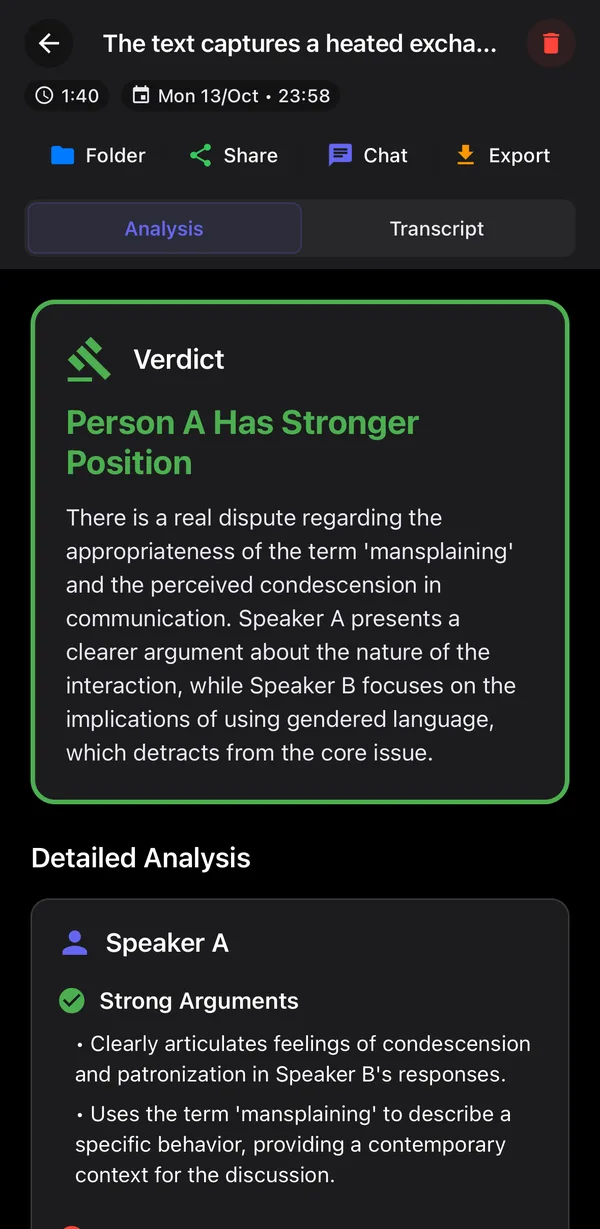
ArgueResolver listens while you talk it out, works out who said what, and gives an honest verdict on what was actually said, with compromises and steps to fix it.
Free to start · See how it works